
How Does The Brain Make Memories? A Simple Science Guide
Every conversation you remember, skill you learn, face you recognize, and experience you look back on depends on one of the brain’s most remarkable abilities: memory.
Memories shape identity, guide decisions, influence emotions, and let us learn from past experiences. But how does the brain make memories in the first place? The process is far more sophisticated than simply recording an experience like a camera.
The brain continuously receives enormous amounts of sensory information, decides what deserves attention, converts selected information into patterns of neural activity, strengthens connections between brain cells, and later reconstructs those patterns when we need to remember something.
The brain makes memories by encoding information, strengthening neural connections, storing experiences, and retrieving them when needed.
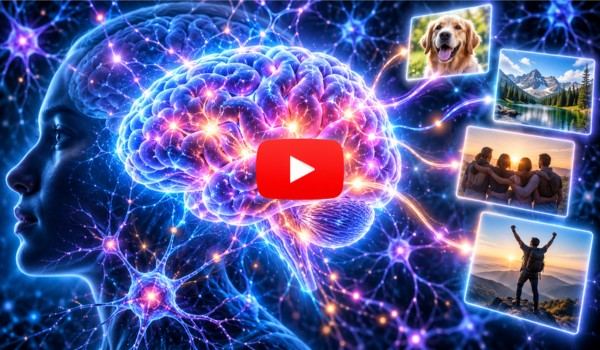

Several brain regions participate in this process. The hippocampus plays an especially important role in forming new memories of facts and events, while the cerebral cortex contributes to longer-term storage.
The amygdala can strengthen emotionally charged memories, and other brain systems help store habits, skills, and movements.
Memory formation is therefore not a single event. It is a dynamic biological process involving encoding, consolidation, storage, and retrieval.
Understanding how these processes work can also help explain why sleep improves learning, why emotional moments are often easier to remember, why repetition strengthens memory, and why forgetting is actually a normal part of healthy brain function.
What Is Memory?
Memory is the brain’s ability to encode, retain, and retrieve information. It allows information from previous experiences to influence present behavior. Without memory, even simple activities would become extremely difficult because every situation would feel completely new.
Imagine waking up without remembering your home, family, language, workplace, or even how to prepare breakfast. Much of everyday life depends on information the nervous system has learned and retained. However, memory is not one single mental ability.
Different types of memory rely on overlapping but partly distinct brain networks. Remembering someone’s birthday is different from remembering how to ride a bicycle.
Holding a phone number in your mind for a few seconds is also different from remembering something that happened twenty years ago.
Scientists therefore divide memory into several categories.
The Main Types of Memory
Understanding the different forms of memory makes it easier to understand how the brain creates them.
⬩➤ Sensory Memory
Sensory memory briefly holds information arriving through the senses. For example, after looking away from a bright image, you may briefly retain an impression of what you just saw.
Similar short-lived traces occur with sound, touch, smell, and other sensory information. Most sensory information disappears rapidly unless the brain decides it is important enough to pay further attention to.
⬩➤ Short-Term Memory
Short-term memory keeps information available for a limited time. For example, you might remember a verification code long enough to enter it into a website and then forget it minutes later. Short-term memory has limited capacity. Without rehearsal or meaningful processing, much of this information quickly disappears.
⬩➤ Working Memory
Working memory is closely related to short-term memory but involves actively manipulating information.
⬩➤ You use working memory when you:
- Perform mental arithmetic
- Follow several steps in a recipe
- Remember part of a sentence while reading the rest
- Compare two choices in your mind
- Follow spoken directions
- Plan your next move during a task
The prefrontal cortex is particularly important for many working-memory functions.
⬩➤ Long-Term Memory
Long-term memory can preserve information for hours to decades. Long-term memory includes several major categories.
⬩ Episodic memory involves experiences and events, such as remembering your first day at a new job.
⬩ Semantic memory involves general knowledge, including facts, concepts, meanings, and vocabulary.
⬩ Procedural memory involves learned skills and actions, such as typing, swimming, playing a musical instrument, or riding a bicycle.
These forms of memory do not depend on exactly the same brain regions.
⬩➤ How Does The Brain Make Memories?
Memory formation can be simplified into four interconnected stages:
Encoding → Consolidation → Storage → Retrieval
Each stage involves coordinated activity among neurons and brain regions. The process begins when something captures your attention.
1. Encoding: Turning an Experience Into a Brain Signal
Before something can become a memory, the brain must first encode it. Encoding occurs when the brain transforms information from an experience into a pattern the nervous system can process.
Consider meeting someone for the first time. Your visual system processes the person’s face. Your auditory system processes their voice and name.
Other systems may register where you are, what the person is wearing, the surrounding environment, your emotional response, and what you are discussing.
The brain does not store these elements as one photograph. Instead, different aspects of the experience are processed through interconnected networks.
Attention strongly influences whether information becomes successfully encoded. If someone tells you their name while you are distracted by a phone notification, you may forget the name moments later.
The problem may not necessarily be retrieval—the information may never have been strongly encoded in the first place. This is one reason focused attention is so important for learning.
2. The Hippocampus Helps Organize New Memories
One of the most important structures involved in forming new declarative memories is the hippocampus. The hippocampus is located deep within the temporal lobe and participates in organizing information about experiences, facts, places, relationships, and context.
It is particularly important for creating new memories that can later be consciously recalled. Rather than acting like a permanent storage box, the hippocampus appears to help connect different elements of an experience. Imagine remembering dinner at a restaurant.
⬩➤ Different brain systems process:
- The appearance of the restaurant
- The music playing
- The conversation
- The taste of the food
- The people sitting with you
- Your emotional reaction
- The location and time
The hippocampus helps bind aspects of these distributed experiences together so the event can later be reconstructed as a coherent memory.
This helps explain why hippocampal damage can severely interfere with the ability to create certain types of new memories even when some older memories and learned skills remain relatively preserved.

3. Neurons Strengthen Their Connections
At the cellular level, learning involves changes in communication between neurons, the specialized cells of the nervous system. Neurons communicate with one another across connections known as synapses.
When certain neural pathways are repeatedly activated, communication at some synapses can change. Connections may strengthen or weaken depending on patterns of activity.
This ability of the nervous system to change in response to experience is known as neuroplasticity. One extensively studied form of synaptic plasticity is called long-term potentiation, or LTP.
Long-term potentiation describes a lasting increase in the strength of communication between neurons following particular patterns of activity. A simple way to understand the concept is:
When particular neural pathways repeatedly become active together, communication within those pathways can become more effective.
Memory is much more complex than LTP alone, but changes in synaptic strength are considered an important part of the biological foundation of learning and memory.
4. Consolidation Stabilizes the Memory
New memories are initially vulnerable. After an experience has been encoded, biological processes help stabilize it. This process is known as memory consolidation.
Consolidation occurs at multiple levels. At the cellular level, chemical and structural changes can modify synapses. At a broader systems level, interactions between the hippocampus and areas of the cerebral cortex appear to reorganize newly learned information over time.
A memory therefore does not instantly become a permanent, unchanging file. Its neural representation can continue developing after the original experience ends. This is one reason why what happens after learning can influence how successfully something is remembered.
Why Sleep Is Important for Memory Formation
Sleep is not simply a period when the brain shuts down. The sleeping brain remains highly active, and research has linked sleep with important processes involved in memory consolidation.
During sleep, patterns of neural activity linked to previous experiences may be reactivated, or “replayed.” Scientists believe this replay can help strengthen and reorganize newly acquired information.
Slow-wave sleep has been particularly associated with consolidation of certain declarative memories, while REM sleep has been studied for its possible roles in emotional and procedural memory processing.
Different stages of sleep likely contribute to memory in different and interacting ways. This helps explain why studying all night without sleeping may not be the most effective learning strategy.
Learning introduces information into the system, but adequate sleep gives the brain a chance to keep processing and stabilizing some of what was learned.
How Are Long-Term Memories Stored?
A common misconception is that every memory eventually moves into one specific storage area of the brain. The reality is more distributed.
Long-term memories appear to involve networks across the cerebral cortex and other brain regions. Different components of a memory may therefore be represented in areas associated with the type of information involved.
Visual information can involve visual-processing regions. Sound-related components may involve auditory networks. Knowledge about movement can involve motor-related circuits.
Emotional significance can involve the amygdala and interconnected systems. Spatial and contextual information can involve the hippocampus and related structures.
Remembering an event may require these distributed pieces to become reactivated together. Memory therefore resembles a network of interconnected information more than a folder stored in a single location.
What Does the Amygdala Do in Memory?
The amygdala is closely associated with emotional processing and can influence how strongly are remember certain experiences. Think about ordinary events from several years ago. Many may be difficult to recall.
⬩➤ Yet you may vividly remember:
- A wedding
- Receiving important news
- A frightening incident
- An exciting achievement
- Meeting someone significant
- A deeply embarrassing moment
Emotional arousal can influence processes involved in memory consolidation. The amygdala interacts with other memory-related systems, helping prioritize experiences that may be emotionally or biologically important.
This does not mean emotional memories are always perfectly accurate. A memory may feel extremely vivid while still containing inaccuracies.
Vividness and accuracy are not the same thing.
How Does the Brain Recall a Memory?
Forming a memory is only useful if the brain can access it later. This process is known as retrieval. Retrieval occurs when a cue activates parts of the neural network associated with stored information.
Suppose you smell a particular perfume and suddenly remember visiting a relative’s home many years ago. The smell acts as a retrieval cue.
⬩➤ Other common memory cues include:
- Songs
- Photographs
- Locations
- Names
- Emotions
- Conversations
- Objects
- Foods
- Familiar faces
Retrieval is not necessarily equivalent to opening an unchanged file on a computer. The brain reconstructs memories. During reconstruction, stored information can interact with present knowledge, expectations, context, and emotion. This helps explain why memories can gradually change.
Why Do Memories Sometimes Change?
People commonly think of memory as a video recording of the past. Human memory is much more flexible. When a memory is retrieved, it can temporarily become open to modification before being stabilized again.
Researchers call the processes involved in restabilizing recalled memories reconsolidation. New information, later experiences, expectations, and suggestions can sometimes become integrated with existing memories.
As a result, people can confidently remember details that are incomplete or inaccurate. This does not mean memories are useless.
Memory is extraordinarily valuable, but it is designed to help people interpret and navigate the world rather than provide a perfect recording of everything that has happened.

Why Does the Brain Forget Things?
Forgetting can be frustrating, but it is a normal feature of memory. The brain receives far more information than it can practically retain in detail. Forgetting can occur for several reasons.
⬩➤ Weak Encoding
Sometimes information was never strongly encoded. If your attention was elsewhere when the information appeared, you may not form a strong memory to retrieve later.
⬩➤ Interference
New and old information can compete with one another. For example, after changing your password several times, older passwords may interfere with remembering the current one—or the new password may make an older one harder to retrieve.
⬩➤ Retrieval Failure
Sometimes a memory exists, but the correct cue is temporarily unavailable. This creates the familiar experience of knowing something but being unable to recall it. Later, a related word, place, or idea may suddenly trigger the answer.
⬩➤ Memory Changes Over Time
Memories that are rarely reactivated may become harder to retrieve or lose certain details. The brain also reorganizes information over time, often preserving broader meanings while some specific details become less accessible.
Why Repetition Helps Memory
Repetition can strengthen learning because repeated exposure gives the brain additional opportunities to encode and reactivate information.
However, simply rereading something repeatedly is not always the most efficient learning technique. Active retrieval can be particularly useful.
Instead of reading the same paragraph five times, close the page and try to explain what you learned without looking. Retrieval activates the memory network and reveals which parts remain weak.
Spacing learning over multiple sessions can also be more effective than trying to memorize everything during one prolonged session.
For example, studying for thirty minutes on several different days may produce stronger long-term learning than cramming everything into a single evening.
How Stress Can Affect Memory
Stress and memory have a complicated relationship. Short-term emotional arousal may sometimes strengthen memory for important aspects of an event.
However, intense or prolonged stress can interfere with attention, concentration, sleep, and retrieval. If the brain is occupied with worries or perceived threats, fewer cognitive resources may be available for learning new material.
Stress-related sleep disruption can create another problem because adequate sleep supports memory processing. Managing chronic stress may therefore benefit memory indirectly by supporting attention, sleep, and overall cognitive functioning.
⬩➤ Exercise and Brain Health
Physical activity supports general cardiovascular health, and the brain depends heavily on healthy blood flow and metabolic function. Regular exercise is associated with benefits across several aspects of physical and cognitive health.
Exercise should not be viewed as a guaranteed way to prevent memory disorders, but it is one component of a broader brain-healthy lifestyle.
Walking, cycling, swimming, strength training, dancing, and recreational sports can all contribute to physical activity depending on a person’s health and abilities.
⬩➤ Nutrition and Memory
The brain requires a continuous supply of energy and essential nutrients. Rather than searching for a single “memory food,” it is more useful to think about overall dietary patterns.
A balanced diet that includes vegetables, fruits, whole grains, healthy fats, protein sources, and adequate hydration can support general health. Cardiovascular risk factors also matter because healthy brain function depends on healthy circulation.
People with nutritional deficiencies or medical conditions should discuss individual dietary needs with a healthcare professional rather than assuming that supplements alone will improve memory.
How Social Interaction Supports the Brain
Conversation is surprisingly demanding for the brain.
⬩➤ During a social interaction, you may simultaneously:
- Recognize faces
- Interpret facial expressions
- Remember names
- Process language
- Retrieve previous conversations
- Understand emotion
- Predict another person’s response
- Formulate your own response
Regular social engagement therefore stimulates multiple cognitive systems at once. Meaningful relationships can also contribute to emotional well-being and may encourage healthier routines, physical activity, and continued engagement with everyday life.

Can You Improve Your Ability to Form Memories?
Although memory ability varies among individuals, learning strategies can make information easier to retain.
⬩➤ Pay Full Attention
Memory begins with encoding. Reduce unnecessary distractions when learning important information.
⬩➤ Connect New Information With Existing Knowledge
Information becomes easier to remember when it has meaning. Instead of memorizing an isolated fact, connect it with something you already understand.
⬩➤ Use Active Recall
Test yourself rather than repeatedly rereading information. Trying to retrieve information strengthens access to it.
⬩➤ Space Your Learning
Review material over multiple sessions rather than relying entirely on last-minute cramming.
⬩➤ Organize Information
Breaking complicated material into logical groups reduces cognitive overload.
⬩➤ Use Multiple Associations
Connect information with images, examples, locations, stories, or existing knowledge. More meaningful associations can provide additional retrieval cues.
⬩➤ Get Adequate Sleep
Learning continues beyond the moment you stop studying. Sleep supports processes involved in consolidating newly acquired information.
⬩➤ Stay Physically Active
Regular physical activity contributes to overall cardiovascular and brain health.
⬩➤ Manage Stress
Chronic stress may make attention and learning harder, especially when it disrupts sleep.
What Happens to Memory as We Age?
Some changes in memory can occur with normal aging. People may take longer to retrieve names, learn unfamiliar information, or remember minor details.
Needing slightly more time to recall something does not automatically indicate a neurological disorder. However, significant memory problems that interfere with everyday independence deserve medical attention.
Examples include repeatedly getting lost in familiar places, frequently forgetting important conversations, struggling with everyday tasks that were once routine, or experiencing major changes in reasoning or judgment.
Memory problems can have many possible causes, some of which may be treatable. These can include medication effects, sleep problems, nutritional deficiencies, depression, thyroid problems, neurological disorders, and other health conditions.
Anyone experiencing new, rapidly worsening, or disruptive memory changes should discuss them with a qualified healthcare professional.
Is Every Memory Stored Permanently?
No, every memory is not stored permanently. The brain constantly filters information and keeps only a small portion for long-term use. Factors such as attention, repetition, emotion, sleep, and prior knowledge shape what we remember.
Even established memories can weaken, change, or become harder to retrieve over time. This flexibility allows the brain to update information, adapt to new experiences, and prioritize what seems most important.
The Brain Does Not Work Like a Computer Hard Drive
Comparing the brain to a computer can be useful, but the analogy has limitations. Computers generally store identical copies of digital information in defined locations.
Human memory is more dynamic. The brain creates interconnected representations that can change with learning and retrieval.
⬩➤ A memory can become:
- Stronger through repetition
- Easier to retrieve through associations
- More generalized over time
- Modified by later information
- Influenced by emotion
- Harder to access after long periods without retrieval
Memory is therefore an active biological process, not passive data storage.
A Simple Example of How a Memory Is Made
Imagine attending a friend’s birthday dinner. Your brain receives sights, sounds, smells, and conversations while attention selects important details.
The hippocampus helps organize these experiences, and emotional moments may become stronger memories. Through neuroplasticity and consolidation, the brain stabilizes the information.
Later, seeing a photograph can trigger retrieval, reactivating neural networks and helping you remember people, places, conversations, and feelings from the event.
Frequently Asked Questions About How the Brain Makes Memories
Where are memories made in the brain?
No single brain region creates every type of memory. The hippocampus plays a major role in forming new declarative memories, while cortical regions and several other brain structures participate in long-term storage, skills, emotion, and retrieval.
What are the four stages of memory?
Memory is commonly described through encoding, consolidation, storage, and retrieval. These stages overlap and involve multiple biological processes rather than functioning as completely separate steps.
Does the hippocampus store all memories?
No. The hippocampus is especially important for establishing and organizing certain new memories, but long-term memories involve distributed neural networks throughout the brain.
Why are emotional memories so strong?
Emotional arousal can influence memory consolidation through interactions involving the amygdala and other memory-related brain systems. This can make emotionally important experiences especially memorable, although vivid memories are not necessarily perfectly accurate.
Does sleep help create memories?
Sleep supports memory consolidation and reorganization. Research suggests that neural activity associated with recent learning can be replayed during sleep, helping stabilize and integrate information.
Why can I remember something from childhood but forget what I did yesterday?
Older memories may have been repeatedly retrieved and reinforced over many years, while everyday recent events may receive little attention or emotional significance. Memory strength depends on many factors beyond how recently something happened.
Can memories change after they are formed?
Yes. Memory is reconstructive, not a perfect recording. Retrieval and later experiences can influence how memories are represented and remembered.
Can memory improve with practice?
Learning strategies such as active recall, spaced repetition, focused attention, meaningful associations, adequate sleep, and regular mental engagement can improve how efficiently you learn and retrieve information.
Final Thoughts:
So, how does the brain make memories?
It begins when attention allows the brain to encode information from an experience. Brain regions, including the hippocampus, help organize different parts of that experience, while communication between neurons changes through neuroplasticity.
The new memory is then gradually consolidated, with interactions among the hippocampus, cerebral cortex, and other neural networks helping stabilize and reorganize information. Sleep appears to play an especially important role in this process.
Long-term memories are not stored in one tiny section of the brain. Instead, different features of memories are represented across interconnected networks. When something later triggers those networks, the brain reconstructs the experience through retrieval.
Emotion, repetition, attention, prior knowledge, sleep, physical health, and meaningful associations can all influence how well something is remembered.
Perhaps the most fascinating aspect of memory is that it is never completely static. Every time we learn, practice, remember, and experience something new, neural networks can change.
In that sense, memory is more than a record of the past. It is an ongoing biological process that allows the brain to learn from experience, understand the present, and prepare for the future.
Reference
https://en.wikipedia.org/wiki/Memory
https://www.webmd.com/brain/what-to-know-about-memory
https://www.healthline.com/health/what-part-of-the-brain-controls-memory
About Us
