Hume Body Pod vs Garmin Index S2: Which Is Better in 2026?
Choosing a smart scale used to be simple: find one that measures your weight, connects to an app, and tracks changes over time. Today, premium body-composition devices go much further.
Two options attracting attention are the Hume Body Pod and the Garmin Index S2, but they approach health tracking in noticeably different ways.
The Hume Body Pod vs. Garmin Index S2 comparison matters most for people who want more than a basic bathroom scale.
Hume Body Pod offers deeper body composition insights, while Garmin Index S2 excels in easy tracking, Wi-Fi syncing, and Garmin integration.
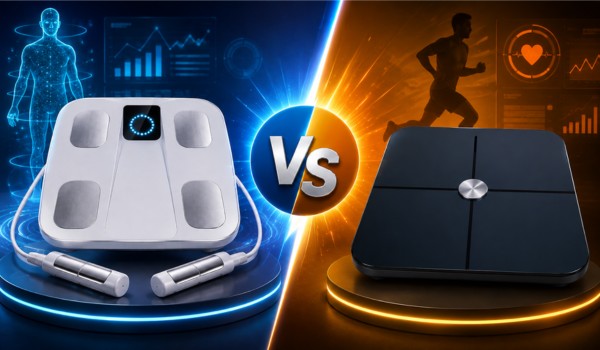
Both can monitor weight and body-composition trends, but Hume focuses on detailed body analysis and personalized wellness insights, while Garmin focuses on convenient tracking and integration with the broader Garmin fitness ecosystem.
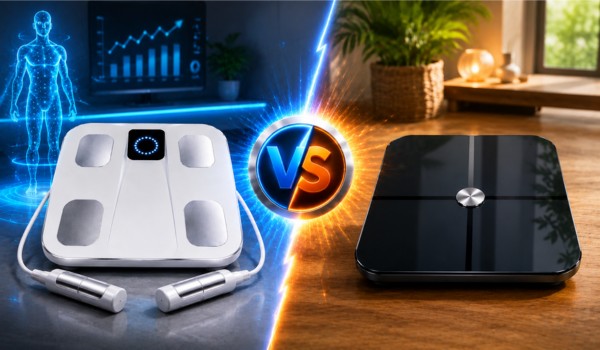
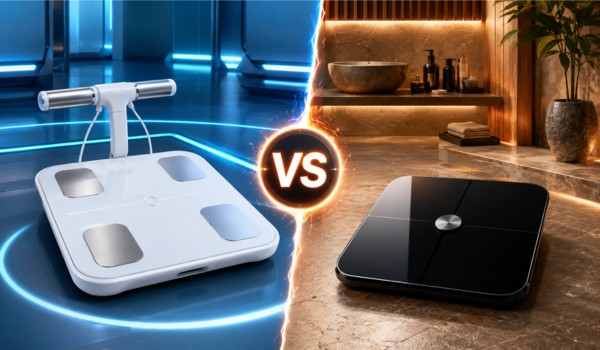
Hume uses a platform-and-handle design intended to analyze more areas of the body and reports dozens of measurements through the Hume Health app.
Garmin takes a more traditional approach: step onto the Index S2, let the scale recognize you, and have the results automatically uploaded to Garmin Connect through Wi-Fi.
So, is the more advanced Hume system automatically the better purchase? Not necessarily. For some users, Garmin’s simplicity and ecosystem integration may matter more than dozens of extra measurements.
This detailed review of the Hume Body Pod vs Garmin Index S2 examines their technology, measurements, apps, accuracy considerations, design, connectivity, family support, pricing, advantages, limitations, and overall value.
Hume Body Pod vs Garmin Index S2: Quick Answer
For people primarily interested in detailed body-composition tracking, the Hume Body Pod is the more feature-rich option.
Its handheld electrodes, dual-frequency bioelectrical impedance technology, segmental analysis, and approximately 45 reported body measurements make it particularly appealing for people tracking fat loss, muscle development, hydration, and body recomposition.
The Garmin Index S2 is the better choice for many existing Garmin users. It automatically sends measurements via Wi-Fi to Garmin Connect, supports up to 16 user profiles, provides useful body composition measurements, and displays weight data alongside workouts, sleep, activity, and other Garmin information.
Neither should be treated as a replacement for a clinical body-composition assessment. Smart scales estimate many body composition values using bioelectrical impedance analysis (BIA), so hydration, food intake, exercise, and measurement timing can influence the results.
Hume Body Pod vs Garmin Index S2 Comparison
| Feature | Hume Body Pod | Garmin Index S2 |
|---|---|---|
| Primary Focus | Detailed body-composition analysis | Weight and fitness ecosystem tracking |
| Technology | Dual-frequency BIA with platform and handheld sensors | Foot-to-foot BIA |
| Body Measurements | About 45 measurements | Weight, BMI, body fat, body water, skeletal muscle, bone mass and trends |
| Segmental Analysis | Yes | No comparable handheld segmental system |
| Visceral Fat Tracking | Yes | Not listed among standard Index S2 measurements |
| Heart-Related Measurement | Heart-rate sensor included | Not a primary scale measurement |
| Display | 2.8-inch graphical display | High-resolution color display |
| Connectivity | Bluetooth; Hume also advertises connected syncing functionality | Bluetooth + Wi-Fi |
| Main App | Hume Health | Garmin Connect |
| Automatic Wi-Fi Upload | Hume experience centers more heavily on its connected app | Yes |
| Multiple Users | Multiple Hume accounts supported | Up to 16 users |
| Maximum Weight | 400 lb / about 181.4 kg | 400 lb / about 181.4 kg |
| Power | Rechargeable Li-ion battery | 4 AAA batteries |
| Battery Life | Hume advertises up to about one year per charge | Up to 9 months |
| Premium App Required? | No; optional Hume Plus adds advanced features | Basic scale use does not require Connect+ |
| Best For | Body recomposition and deeper analysis | Garmin users and simple automatic tracking |
What Is the Hume Body Pod?
The Hume Body Pod is an at-home body-composition analyzer that provides significantly more information than a conventional digital scale.
Rather than relying solely on electrodes beneath your feet, it uses a handheld sensor system that lets electrical signals travel through other parts of your body.
Hume describes the system as capable of producing around 45 body-composition measurements. These include familiar measurements such as weight, body fat percentage, muscle mass, and total body water, as well as more specialized indicators such as visceral fat and segmental metrics.
The platform contains four high-precision weight sensors and supports measurements up to approximately 400 pounds. Users step onto the scale barefoot and hold the attached handles while remaining upright during the scan.
Measurements are transferred to the Hume Health app, where users can monitor changes over days, weeks, months, and longer periods.
This design makes Hume particularly interesting for someone undergoing a body-recomposition program. If your weight stays relatively stable while you lose fat and gain muscle, the scale may make it seem like nothing is happening. Hume provides more context for those changes.

What Is the Garmin Index S2?
The Garmin Index S2 is Garmin’s Wi-Fi-connected smart scale that integrates directly with Garmin Connect.
Its physical design is closer to a premium traditional bathroom scale. You step barefoot onto its glass platform; the scale identifies your profile, measures your weight and estimated body composition, and displays selected information on its color screen.
🔹 The Index S2 measures or calculates several major metrics, including:
- Weight
- 30-day weight trend
- Body mass index
- Body-fat percentage
- Body-water percentage
- Skeletal muscle mass
- Bone mass
Once you configure Wi-Fi, measurements can automatically upload to Garmin Connect. That means you generally don’t need to keep your smartphone beside the scale every time you weigh yourself.
This convenience is one of the Garmin Index S2’s greatest strengths.
For someone who already wears a Garmin running watch, cycling computer, multisport watch, or fitness tracker, body weight becomes another piece of information within an ecosystem they already use.
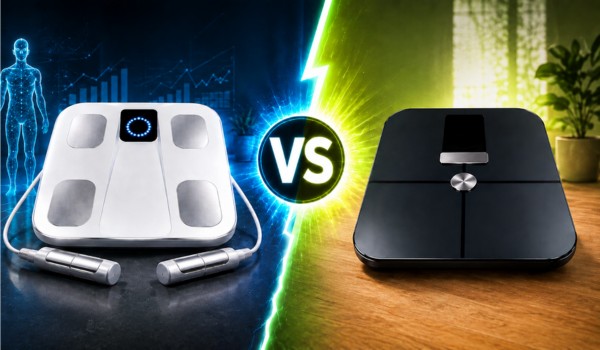
Hume Body Pod vs Garmin Index S2: Measurement Technology
The largest technical difference between these products lies in how they perform body composition analysis.
🔹 Hume Body Pod Technology
The Hume Body Pod uses bioelectrical impedance analysis along with both foot and handheld contact points.
Bioelectrical impedance sends a very low electrical signal through the body. Different tissues affect the electrical signal differently. Those measurements are combined with algorithms and personal information to estimate body composition.
Having hand and foot contact points gives Hume the opportunity to collect information through more areas of the body rather than measuring only the electrical pathway between your feet.
This is particularly relevant to Hume’s segmental analysis.
Someone who strength trains, for example, may be interested not only in total estimated muscle mass but also in how body composition appears across different regions.
Hume also describes its system as dual-frequency BIA, another difference from many conventional consumer scales.
🔹 Garmin Index S2 Technology
The Garmin Index S2 also relies on bioelectrical impedance analysis, but Garmin’s system sends the electrical signal from one foot through the body to the other.
That makes the Garmin considerably simpler to use: there is no handle to pull upward and hold.
Garmin’s own instructions emphasize consistent measurement because eating, drinking, exercising, bathing, sauna use, and hydration status may temporarily affect readings.
For everyday trend tracking, that simplicity may actually be an advantage. The easiest health device to use consistently is often the one that produces the most useful long-term dataset.
🔹 Winner for Measurement Depth: Hume Body Pod
Hume offers the more sophisticated measurement configuration.
🔹 Winner for Measurement Convenience: Garmin Index S2
Garmin requires less interaction during each weigh-in.
Hume Body Pod vs Garmin Index S2 Accuracy
Accuracy deserves careful discussion because smart-scale advertising can easily create unrealistic expectations. First, view weight measurement and body-composition estimation separately.
Digital load sensors can measure total body weight relatively directly. Measurements such as body fat percentage, muscle mass, visceral fat, bone mass, and body water usually rely on mathematical estimates, partly based on electrical impedance.
That means a scale can be highly consistent when measuring weight while still producing body-fat results that differ from another device.
🔹 Hume Body Pod Accuracy Claims
Hume says its Body Pod has been evaluated against DEXA scanning and advertises approximately 98% DEXA-level accuracy. The company also states that its testing found the Body Pod to be within roughly ±3% of DEXA.
Those are noteworthy claims, especially considering that Hume uses additional contact points and dual-frequency technology.
However, consumers should interpret those figures appropriately. A manufacturer-reported comparison does not mean every body-fat reading for every user will always be within the same margin.
Individual physiology, hydration status, positioning, recent exercise, food consumption, skin contact, and other factors can still affect BIA measurements.
🔹 Garmin Index S2 Accuracy
Garmin does not emphasize a DEXA-equivalent percentage in the same way.
Instead, Garmin specifically recommends controlling measurement conditions. The company advises users to measure under similar circumstances and at approximately the same time of day.
Garmin also recommends waiting after eating, drinking, exercising, bathing, or using a sauna because these activities can alter body weight, hydration, and water distribution.
Why Trends Matter More Than Individual Numbers
Suppose your scale reports 24% body fat on Monday and 22.8% several weeks later. The most useful question is often not whether 24% was your laboratory-verified exact percentage.
The more practical question is whether the downward trend stays consistent when you are measuring under comparable conditions.
For home smart scales, repeatability and long-term trends can be more useful than obsessing over one measurement.
🔹 Overall Accuracy Advantage: Hume Body Pod
Hume’s additional electrodes and segmental design provide a stronger technical foundation for detailed body-composition tracking.
However, users seeking laboratory-grade measurements for medical or research purposes should still consider professional methods rather than assuming a home BIA scale is interchangeable with DEXA.
Body Measurements: Hume Gives You Much More Data
This category produces one of the clearest differences in the Hume Body Pod vs Garmin Index S2 comparison. Garmin concentrates on a smaller number of metrics that most users can understand immediately. Hume goes considerably deeper.
🔹 Garmin Index S2 Measurements
Garmin provides the essentials:
🔹 Weight: Your overall body mass.
🔹 BMI: A calculation based on your weight and height.
🔹 Body Fat Percentage: The estimated percentage of your body composed of fat.
🔹 Body Water Percentage: The estimated proportion of body weight attributed to water.
🔹 Skeletal Muscle Mass: An estimate of the amount of skeletal muscle.
🔹 Bone Mass: Estimated body mass attributed to bone.
🔹 Weight Trend: A 30-day graph helps prevent users from overreacting to normal daily fluctuations.
For many people, that’s enough information.
🔹 Hume Body Pod Measurements
Hume goes well beyond these basics, reporting about 45 measurements within its ecosystem.
🔹 Highlighted metrics include:
- Weight
- Body-fat percentage
- Fat mass
- Muscle mass
- Total body water
- Visceral fat
- Bone mass
- Bone mineral-related measurements
- Metabolic-age-related information
- Segmental body measurements
- Intracellular water
- Extracellular water
- Additional composition indicators
This depth can be valuable for fitness enthusiasts, strength-training users, and people undergoing major body-composition changes. At the same time, more data is not automatically better.
If you do not understand or use the additional measurements, they can become unnecessary numbers rather than actionable information.
🔹 Winner: Hume Body Pod
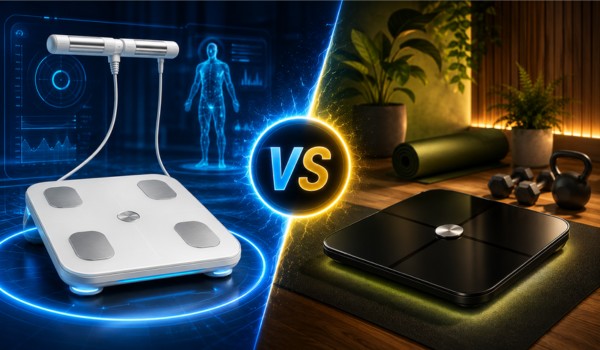
Garmin Connect vs Hume Health App
Hardware is only half of a smart-scale purchase. You will probably spend more time looking at the associated app than at the scale itself.
🔹 Hume Health App
The free version of the Hume Health app supports device syncing, body-composition tracking, and progress tracking. Hume also offers a premium level called Hume Plus.
Premium features can include expanded analysis such as personalized coaching, weekly wellness information, nutrition tools, deeper insights, and additional programs.
Hume’s product information currently indicates that a premium subscription is not required to use the Body Pod or view core body measurements.
This distinction matters. You are not purchasing expensive hardware only to discover that basic scale data is locked behind a recurring payment.
Hume also supports integrations that can bring in additional wellness data, helping the app connect body-composition changes to activity, sleep, nutrition, and lifestyle patterns.
🔹 Garmin Connect
Garmin Connect takes a different approach.
Its biggest advantage isn’t necessarily the dashboard’s scale. Its advantage is that it can already exist alongside everything else in Garmin Connect.
🔹 A Garmin user may have:
- Daily steps
- Running distance
- Cycling activity
- Workout history
- Heart-rate information
- Sleep data
- Stress information
- Training load
- Recovery information
- VO2 max
- Body Battery data
- Calories
- Weight and body composition
Adding the Index S2 makes body weight and composition part of this established dataset. For athletes already using Garmin devices, that integration is extremely compelling.
🔹 Best Standalone Body-Composition App: Hume
🔹 Best Fitness Ecosystem: Garmin
Connectivity and Automatic Syncing
The Garmin Index S2 has a major usability advantage through Wi-Fi. After initial configuration, the scale can automatically upload your weigh-in to Garmin Connect through your home Wi-Fi network.
You don’t need to keep your smartphone beside the scale every morning. That sounds like a minor feature until you use the scale every day. Reducing friction makes tracking easier.
Hume offers connected syncing through its app, including Bluetooth functionality, but its multi-user instructions note that Bluetooth can connect to only one phone at a time.
For an individual user, this may not matter. For a busy household where several people use the device, Garmin’s Wi-Fi-first workflow can feel more seamless.
🔹 Winner: Garmin Index S2
✅ Get Hume Band at the Lowest Price Today!
Display and Everyday Experience
Both devices include displays, but Garmin makes the scale itself a larger part of the information experience. The Garmin Index S2 features a high-resolution color display and lets users configure the information displayed after a weigh-in.
You can see measurements without immediately opening Garmin Connect. One unusual Garmin feature is its weather widget.
While weather obviously has nothing to do with body composition, someone weighing themselves before heading out for an early-morning run may actually appreciate it. Garmin can also display your 30-day weight trend directly on the scale.
Hume has a roughly 2.8-inch display, but the deeper experience is centered on the Hume Health app, since dozens of metrics are impractical to analyze on a small screen.
🔹 Winner for On-Scale Experience: Garmin Index S2
Multi-User and Family Use
Garmin officially supports up to 16 users.
Each person can have an individual Garmin Connect account, making the Index S2 particularly suitable for families, fitness groups, or shared households.
The scale attempts to determine which registered person is standing on it and associates the measurement with the appropriate account.
Hume also supports multiple accounts. Its product materials discuss family-oriented functionality, but its Bluetooth connection can only actively connect with one phone at a time.
For one or two health-focused users, Hume’s approach should generally be manageable. For a large household that wants everyone to step on the same scale with minimal interaction with the app, Garmin offers the cleaner system.
🔹 Winner: Garmin Index S2
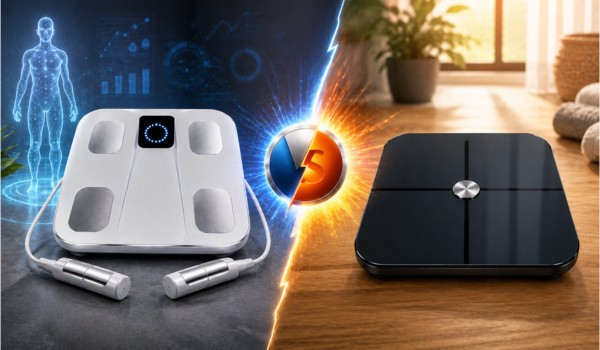
Maximum Weight and Size
The two scales are closely matched in maximum supported weight. The Hume Body Pod supports approximately 400 pounds (181.4 kilograms). The Garmin Index S2 also supports approximately 400 pounds (181.4 kilograms).
🔹 Hume’s published dimensions are approximately:
12.7 × 12.7 × 1.1 inches
🔹 Garmin’s dimensions are approximately:
12.6 × 12.2 × 1.1 inches
Neither requires an unusually large amount of bathroom floor space.
Because the Hume Body Pod includes the handheld component, however, its actual measurement experience feels more like using a compact body-composition analyzer than simply stepping onto a scale.
Battery Life: Rechargeable vs Replaceable
Hume and Garmin take different approaches to power.
🔹 Hume Body Pod
The Hume Body Pod uses a rechargeable lithium-ion battery. Hume advertises up to 1 year of battery life per charge under expected usage conditions. That eliminates the need to purchase disposable batteries regularly.
🔹 Garmin Index S2
The Garmin Index S2 uses four AAA alkaline batteries. Garmin estimates up to 9 months of battery life. Some buyers will prefer Hume’s rechargeable design.
Others may prefer Garmin because replacing AAA batteries takes seconds and does not require moving the scale near a charger.
🔹 Winner: Tie
The better solution depends on whether you prefer rechargeable or replaceable power.
Hume Body Pod vs Garmin Index S2 Price
Always check pricing right before buying, since promotions and retailer prices change frequently.
At the time of this comparison in August 2026, Hume’s U.S. product listings showed the Hume Body Pod at about $229, though promotions may change that price.
Garmin Index S2 pricing varies depending on the seller and promotion. Major U.S. retail listings at the time of this review listed the product at around $199.99, although discounts may periodically reduce the price.
That means these products increasingly occupy similar premium-smart-scale territory. The real value question, then, is not simply, “Which one costs less?”
It is:
🔹 Which ecosystem and measurement approach will you actually use?
If detailed body composition is the reason you are buying the scale, paying for Hume’s extra sensors makes sense.
If you already own Garmin wearables and simply want your weight automatically synced to Garmin Connect, the Index S2 may offer significantly greater practical value.
✅ Get Hume Band at the Lowest Price Today!
Hume Body Pod Pros and Cons
🔹 Pros
- Measures approximately 45 body-composition indicators
- Handheld and foot electrodes provide broader body analysis
- Supports segmental measurements
- Tracks visceral fat
- Dual-frequency BIA technology
- Useful for muscle-gain and fat-loss programs
- Rechargeable battery
- Free app provides essential tracking
- Advanced coaching available for users who want it
- Up to 400-pound capacity
🔹 Cons
- More expensive than basic smart scales
- Scan process requires holding the handles correctly
- Additional metrics may overwhelm casual users
- Advanced Hume Plus insights may require a subscription
- BIA measurements can still fluctuate with hydration and other conditions
Garmin Index S2 Pros and Cons
🔹 Pros
- Excellent Garmin Connect integration
- Automatic Wi-Fi syncing
- Supports up to 16 user profiles
- Attractive high-resolution color display
- Tracks important body-composition metrics
- Displays 30-day weight trends
- Simple step-on measurement process
- Up to nine months of battery life
- Works especially well for Garmin watch users
- 400-pound maximum capacity
🔹 Cons
- Provides fewer body-composition metrics than Hume
- No comparable handheld segmental measurement system
- Does not provide Hume’s depth of visceral and regional analysis
- Premium pricing compared with basic smart scales
- Body-composition estimates are affected by hydration and measurement conditions
Which Is Better for Weight Loss?
For basic weight loss, either scale can work well.
The Garmin Index S2 makes daily adherence extremely easy. Step onto the scale, allow it to record your information, and Garmin Connect stores your results.
Its 30-day weight trend is particularly useful because daily weight can fluctuate significantly even during fat loss. Hume becomes more interesting when weight loss turns into body-composition management.
Imagine losing five pounds while maintaining most of your muscle compared with losing five pounds consisting partly of muscle tissue. Your bathroom scale sees five pounds either way.
Hume attempts to provide additional information that helps distinguish those changes.
🔹 Best for Simple Weight-Loss Tracking: Garmin Index S2
🔹 Best for Detailed Fat-Loss Tracking: Hume Body Pod
Which Is Better for Building Muscle?
The Hume Body Pod has the advantage for strength-training and body-recomposition goals.
Both devices estimate muscle mass, but Hume’s segmental architecture and expanded measurement set provide more information for users specifically trying to understand changes beyond total weight.
This can be motivating during periods when body weight remains stable. A person may gain muscle while losing fat, causing relatively little movement on an ordinary scale.
Seeing longer-term changes in estimated muscle and fat measurements may provide a better picture of progress.
Garmin still makes sense for athletes already deeply invested in Garmin Connect, particularly runners, cyclists, and multisport users whose primary focus is training rather than detailed analysis of their physiques.
Which Smart Scale Is Easier to Use?
Garmin wins this category.
🔹 The Index S2 is designed around a simple routine:
- Step onto the scale.
- Allow it to identify you.
- View your measurements.
- Step off.
- Let Wi-Fi handle the upload.
Hume requires slightly more involvement because you need to use the handheld electrodes properly during a complete scan. That extra effort exists for a reason: the additional contact points enable Hume’s deeper analysis.
Therefore, this category involves a tradeoff rather than a flaw. Garmin prioritizes convenience. Hume prioritizes measurement depth.
How to Get More Consistent Smart-Scale Readings
Whichever device you choose, measurement consistency matters considerably.
🔹 Try following the same routine for each weigh-in:
- Measure at approximately the same time each day.
- Use the scale barefoot.
- Place it on a hard, level surface.
- Measure before breakfast when possible.
- Avoid comparing a post-workout measurement with a rested morning measurement.
- Keep hydration conditions reasonably consistent.
- Avoid judging progress based on a single isolated reading.
- Focus on weekly and monthly trends.
Garmin specifically warns that eating, drinking, exercising, bathing, sauna use, and changes in hydration can affect measurements.
Scientific research on BIA also demonstrates why fluid status matters: the technology relies heavily on how electrical signals interact with body water.
Consistency will therefore make your trend data considerably more meaningful.
Who Should Choose the Hume Body Pod?
🔹 The Hume Body Pod may be the better choice if you:
- Want more than basic weight tracking
- Are focused on body recomposition
- Want segmental body information
- Want visceral-fat tracking
- Want a larger collection of body-composition measurements
- Regularly strength train
- Are trying to distinguish fat loss from muscle changes
- Like detailed wellness dashboards
- Want personalized coaching options
- Do not mind spending slightly more time on each measurement
Hume makes the most sense for users who will actually look at and act on the additional information.
Who Should Choose the Garmin Index S2?
🔹 The Garmin Index S2 may be better if you:
- Already own a Garmin smartwatch
- Regularly use Garmin Connect
- Want automatic Wi-Fi syncing
- Prefer a conventional step-on scale
- Want simple daily tracking
- Need multiple household profiles
- Want up to 16 individual users
- Primarily care about weight, body fat, muscle, water, and trends
- Do not need dozens of additional composition metrics
For someone already immersed in Garmin Connect, the Index S2 can feel like a natural extension of equipment they already own.
Hume Body Pod vs Garmin Index S2: Which Offers Better Value?
Value depends heavily on what you consider useful.
The Garmin Index S2 offers tremendous ecosystem value for existing Garmin users. Automatically combining weight with running, cycling, activity, sleep, recovery, and fitness data eliminates much of the friction of maintaining health records across multiple applications.
The Hume Body Pod offers better measurement value for users who want a device specifically because of body composition.
Its additional sensors, handheld measurement system, dual-frequency approach, and much larger set of reported measurements create a more advanced body-analysis experience.
If you purchased both products but only cared about daily weight, you would be paying for features you rarely use.
On the other hand, a dedicated strength-training user may quickly become frustrated by Garmin’s comparatively limited body-composition detail. Choose based on your intended behavior rather than the longest specification sheet.
Is Hume Body Pod Better Than Garmin Index S2?
For body-composition analysis specifically, yes—the Hume Body Pod is the stronger product on paper.
Its handheld sensing system and broader set of measurements make it the more appropriate choice for users who are buying a smart scale specifically to monitor changes in fat, muscle, water, visceral fat, and related body-composition indicators.
However, Garmin is arguably better at turning daily weighing into an effortless routine.
Its Wi-Fi syncing, automatic user recognition, color display, 16-user support, and Garmin Connect integration give it a major advantage for convenience.
Therefore, there is no universal winner.
Hume Body Pod vs Garmin Index S2: Final Verdict
After comparing the Hume Body Pod vs Garmin Index S2, the right choice ultimately depends on whether you prioritize deeper body analysis or easier fitness integration.
The Hume Body Pod is my preferred option for dedicated body-composition tracking. Its combination of foot and handheld sensors, segmental analysis, dual-frequency BIA, visceral-fat tracking, and approximately 45 reported metrics gives users considerably more information about how their bodies may be changing beyond simple weight.
The Garmin Index S2 remains an excellent choice for Garmin users. Its greatest strength isn’t necessarily the longest list of measurements; it is how effortlessly the scale becomes part of Garmin Connect.
For runners, cyclists, triathletes, and Garmin watch owners who already review their health data in a single application, that convenience can outweigh the extra metrics Hume offers.
If your goals are fat loss, muscle development, body recomposition, and detailed body composition monitoring, I would lean toward the Hume Body Pod.
If your priority is effortless weigh-ins, automatic syncing, household use, and Garmin ecosystem integration, I would choose the Garmin Index S2.
Most importantly, treat either device as a trend-tracking wellness tool rather than a medical diagnostic instrument. Consistent measurements taken under similar conditions will generally provide more useful information than focusing on whether a single body-fat or muscle reading is perfectly accurate.
✅ Get Hume Band at the Lowest Price Today!
Frequently Asked Questions About Hume Body Pod vs Garmin Index S2
Is the Hume Body Pod more accurate than Garmin Index S2?
Hume uses handheld and foot electrodes with dual-frequency BIA and markets its system as being closely comparable with DEXA in company testing. Garmin uses foot-to-foot BIA and focuses more on consistent trend tracking rather than advertising a comparable DEXA accuracy percentage.
Does Garmin Index S2 measure visceral fat?
Visceral fat is not included among Garmin’s standard published Index S2 measurements. Hume specifically includes visceral fat tracking among the Body Pod’s reported composition data.
Does the Hume Body Pod require a subscription?
No. Hume states that the free app provides core device syncing and body-composition tracking. A Hume Plus subscription is available for additional coaching, nutrition, reports, and advanced insights.
Does Garmin Index S2 require a Garmin watch?
No. You can use the Index S2 with Garmin Connect without owning a Garmin watch. However, the scale becomes considerably more valuable when combined with Garmin wearable data.
Can multiple people use the Hume Body Pod?
Yes. Hume supports multiple accounts, but its Bluetooth connection can connect to only one phone at a time during active use.
How many users can use Garmin Index S2?
Garmin allows up to 16 individual user profiles, making the Index S2 particularly suitable for families and shared households.
Which scale is better for athletes?
It depends on the athlete. Strength-training and physique-focused athletes may prefer Hume’s detailed body-composition analysis, while runners, cyclists, and multisport athletes already using Garmin devices may benefit more from the Index S2’s Garmin Connect integration.
Which is better for body-fat tracking?
The Hume Body Pod offers the more sophisticated setup for body-composition monitoring because it uses additional sensing points and provides more detailed measurements.
Can hydration affect Hume and Garmin measurements?
Yes. Bioelectrical impedance measurements can vary with changes in hydration and body-water distribution. For meaningful comparisons, weigh yourself under similar conditions each time.
Should I replace a DEXA scan with either of the smart scales?
No. Consumer smart scales are useful for convenient home trend monitoring, but they should not be automatically considered substitutes for clinically appropriate body composition tests.
Which one is easier to use every day?
The Garmin Index S2 has the advantage that you simply step onto it, and measurements can automatically upload via Wi-Fi.
Which one should I buy in 2026?
Choose the Hume Body Pod if detailed composition information is your priority. Choose the Garmin Index S2 if you value simplicity, multi-user support, automatic Wi-Fi syncing, and Garmin Connect integration.

Click To Learn More About Hume Band
Reference
https://en.wikipedia.org/wiki/Bioelectrical_impedance_analysis
https://www.webmd.com/fitness-exercise/what-is-body-composition
https://www.healthline.com/health/body-fat-scale-accuracy
https://www.mayoclinic.org/diseases-conditions/obesity/in-depth/bmi-calculator/itt-20084938
About Us