
Constipation is one of the most common digestive issues, affecting people of all ages. It can cause infrequent bowel movements, hard stools, bloating, abdominal discomfort, and a feeling that the bowel has not emptied.
Although occasional constipation is common, ongoing symptoms can interfere with daily comfort and overall well-being. Fortunately, simple dietary changes can often help improve digestive health naturally.
One of the best ways to relieve constipation is by eating more high-fiber foods. Dietary fiber adds bulk to stool, helps it retain water, and supports smoother bowel movements.
Foods such as fruits, vegetables, whole grains, legumes, nuts, and seeds are excellent sources of fiber and can help keep your digestive system working efficiently.
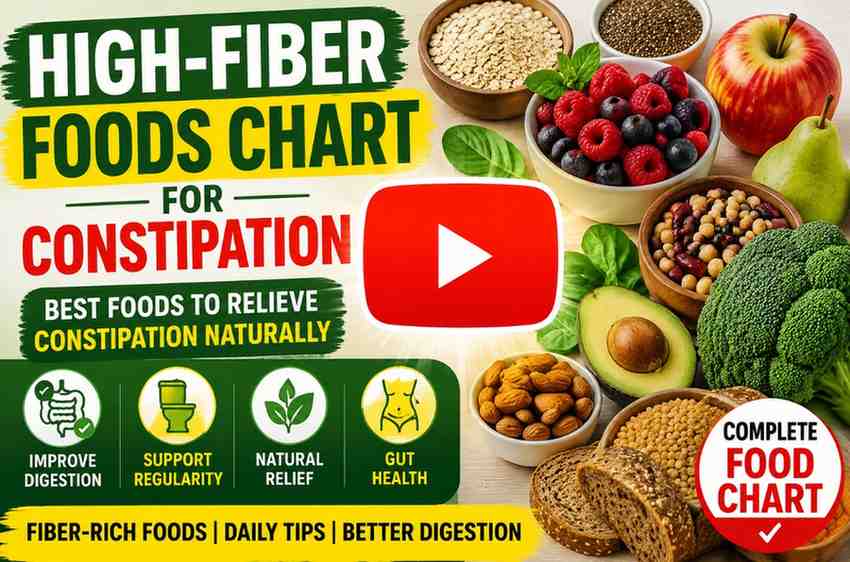

This comprehensive guide explains how fiber works, the difference between soluble and insoluble fiber, daily fiber recommendations, and includes a complete high-fiber foods chart for constipation to help you choose the best foods for digestive health.
What Is Constipation?
Constipation refers to bowel movements that become less frequent or difficult to pass. Most healthcare providers define constipation as having fewer than three bowel movements each week, although symptoms vary from person to person.
Common symptoms include hard or dry stools, excessive straining, abdominal discomfort, bloating, and the feeling that the bowel has not emptied.
Some individuals experience constipation occasionally after traveling or changing their diet, while others may deal with chronic constipation that lasts for several weeks or months.
Several factors contribute to constipation, including inadequate fiber intake, insufficient water consumption, lack of physical activity, pregnancy, aging, stress, certain medications, and some medical conditions.
For many healthy adults, increasing fiber intake is one of the first lifestyle changes recommended to improve bowel regularity naturally.
How Fiber Helps Relieve Constipation
Dietary fiber is a type of carbohydrate naturally found in plant-based foods. Unlike sugars and starches, fiber is not completely digested or absorbed by the body. Instead, it travels through the digestive tract while supporting healthy bowel function.
Fiber absorbs water as it moves through the intestines, helping stools become larger, softer, and easier to pass. This reduces straining and supports more comfortable bowel movements.
Fiber also stimulates the natural movement of the intestines, allowing waste to travel through the digestive system more efficiently. Certain types of fiber serve as food for beneficial gut bacteria, producing compounds that help maintain a healthy digestive environment.
Unlike stimulant laxatives that provide temporary relief, eating enough fiber every day supports the body’s natural digestive process and promotes long-term bowel regularity.
Soluble Fiber vs. Insoluble Fiber
Both types of dietary fiber play important roles in preventing constipation. A balanced diet should include foods containing both soluble and insoluble fiber.
➢ Soluble Fiber
Soluble fiber dissolves in water and forms a gel-like substance inside the digestive tract. This process helps soften stool, supports beneficial gut bacteria, and slows digestion enough to improve nutrient absorption.
Foods high in soluble fiber include:
- Oats
- Barley
- Apples
- Pears
- Citrus fruits
- Beans
- Lentils
- Chia seeds
- Flaxseeds
- Psyllium husk
➢ Insoluble Fiber
Insoluble fiber does not dissolve in water. Instead, it adds bulk to stool and helps move waste through the intestines more quickly. This type of fiber is particularly beneficial for maintaining regular bowel movements.
Excellent sources include:
- Whole wheat
- Wheat bran
- Brown rice
- Broccoli
- Carrots
- Cauliflower
- Green beans
- Nuts
- Seeds
- Leafy vegetables
Most fruits, vegetables, legumes, and whole grains naturally contain both types of fiber, making a varied diet the best choice.

Daily Fiber Requirements
Your daily fiber needs depend on age and sex. Meeting these recommendations consistently helps maintain healthy digestion and may reduce the risk of constipation.
| Age Group | Recommended Daily Fiber |
| Women (19–50 years) | 25 grams |
| Women (51 years and older) | 21 grams |
| Men (19–50 years) | 38 grams |
| Men (51 years and older) | 30 grams |
| Children | 19–31 grams depending on age |
Unfortunately, most adults consume far less fiber than recommended. Increasing fiber gradually while drinking enough water helps prevent temporary bloating or gas during the adjustment period.
High-Fiber Foods Chart for Constipation
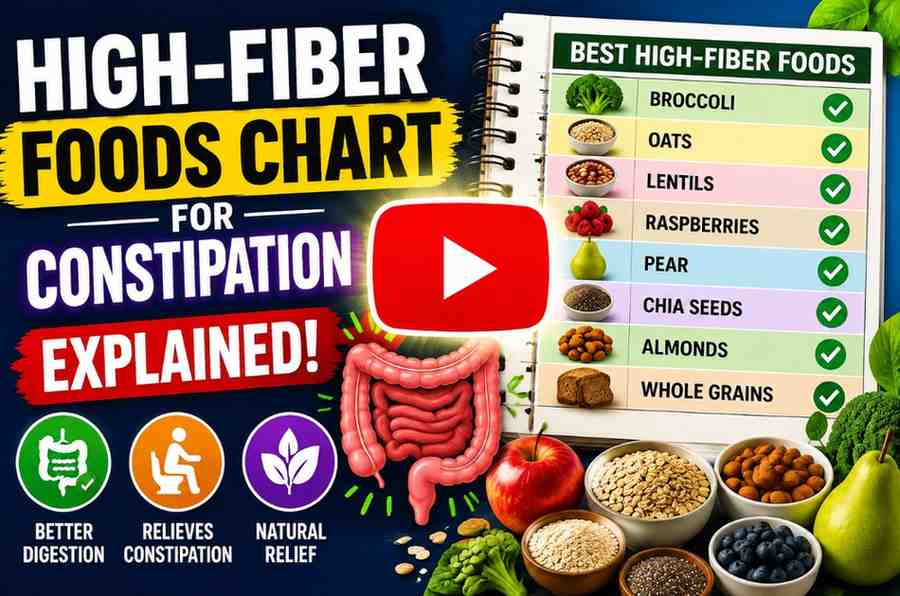
The following chart highlights some of the best foods to naturally increase your fiber intake and promote regular bowel movements.
| Food | Serving Size | Fiber |
| Split Peas (Cooked) | 1 cup | 16 g |
| Lentils (Cooked) | 1 cup | 15.5 g |
| Black Beans | 1 cup | 15 g |
| Kidney Beans | 1 cup | 13 g |
| Chickpeas | 1 cup | 12.5 g |
| Chia Seeds | 2 tablespoons | 10 g |
| Avocado | 1 medium | 10 g |
| Green Peas | 1 cup | 9 g |
| Raspberries | 1 cup | 8 g |
| Blackberries | 1 cup | 7.6 g |
| Brussels Sprouts | 1 cup | 6 g |
| Pear (With Skin) | 1 medium | 6 g |
| Flaxseed | 2 tablespoons | 5.5 g |
| Quinoa | 1 cup cooked | 5 g |
| Broccoli | 1 cup | 5 g |
| Apple (With Skin) | 1 medium | 4.8 g |
| Sweet Potato (With Skin) | 1 medium | 4 g |
| Oatmeal | 1 cup cooked | 4 g |
| Brown Rice | 1 cup cooked | 3.5 g |
| Almonds | 1 ounce | 3.5 g |
| Pistachios | 1 ounce | 3 g |
Best Fruits for Constipation
Fresh fruits provide dietary fiber, water, vitamins, minerals, and antioxidants that support digestive health. Eating fruits daily can naturally improve stool consistency and bowel regularity.
Prunes
Prunes are one of the most well-known natural remedies for constipation. They contain fiber along with naturally occurring sorbitol, which helps soften stools and encourages easier bowel movements.
Pears
Pears are among the highest-fiber fruits, especially when eaten with the skin. Their combination of fiber and water makes them an excellent choice for improving digestion.
Apples
Apples provide pectin, a soluble fiber that supports healthy gut bacteria while helping stools retain moisture.
Berries
Raspberries and blackberries are some of the richest fruit sources of fiber. They also provide antioxidants that support overall health.
Kiwi
Research suggests kiwi may improve stool frequency and consistency due to its combination of fiber, natural enzymes, and water content.
Oranges
Oranges offer both fiber and hydration while providing vitamin C and other nutrients that contribute to digestive wellness.
Best Vegetables for Constipation
Vegetables are naturally rich in dietary fiber and should be included in every balanced diet. They provide both soluble and insoluble fiber while supplying essential vitamins and minerals.
➢ Broccoli
Broccoli contains fiber that adds bulk to stool while delivering antioxidants and vitamin C.
➢ Brussels Sprouts
Brussels sprouts are an excellent high-fiber vegetable that supports healthy bowel movements and nourishes beneficial gut bacteria.
➢ Carrots
Carrots contain both soluble and insoluble fiber, making them a versatile vegetable for improving digestive health.
➢ Spinach
Spinach provides fiber along with magnesium, a mineral that supports normal muscle function throughout the digestive tract.
➢ Sweet Potatoes
Sweet potatoes become even more fiber-rich when eaten with the skin. They also provide vitamin A, potassium, and complex carbohydrates.
➢ Green Peas
Green peas rank among the highest-fiber vegetables and can easily be added to soups, salads, rice dishes, and side meals for additional digestive support.
Best Whole Grains for Constipation
Whole grains are excellent sources of dietary fiber because they retain the bran and germ, which contain most of the fiber and nutrients.
Replacing refined grains with whole grains is a simple way to improve digestive health and increase your daily fiber intake.
📌 Oats
Oats are one of the best breakfast choices for people experiencing constipation. They contain beta-glucan, a soluble fiber that absorbs water and helps soften stool while supporting healthy gut bacteria.
A bowl of oatmeal topped with fresh berries or chia seeds provides a satisfying, fiber-rich meal.
📌 Quinoa
Quinoa is naturally gluten-free and contains more fiber than many refined grains. It also supplies protein, magnesium, and iron, making it a nutritious addition to salads, soups, and grain bowls.
📌 Brown Rice
Brown rice retains its outer bran layer, giving it more fiber than white rice. Pairing brown rice with vegetables and beans creates a balanced meal that supports regular bowel movements.
📌Whole Wheat Bread
Whole wheat bread contains considerably more fiber than white bread. Choosing bread with whole grains listed as the first ingredient helps increase daily fiber intake without changing your eating habits significantly.
📌 Barley
Barley provides both soluble and insoluble fiber, making it one of the most effective whole grains for digestive health. It works well in soups, stews, and grain-based side dishes.
📌 Whole Grain Cereals
Many high-fiber breakfast cereals provide five to ten grams of fiber per serving. Choose varieties with minimal added sugar and whole grains as the primary ingredient for the greatest digestive benefits.
Best Beans, Lentils, and Legumes for Constipation
Legumes are among the richest natural sources of dietary fiber. They contain a combination of soluble and insoluble fiber that helps soften stool while promoting healthy intestinal movement.
Lentils
Cooked lentils provide over 15 grams of fiber per cup, making them one of the highest-fiber foods available. They are also rich in protein, iron, and folate, making them an excellent addition to soups, curries, and salads.
Black Beans
Black beans deliver a substantial amount of fiber while supporting gut health and providing long-lasting fullness. Their mild flavor makes them suitable for tacos, rice bowls, and salads.
Chickpeas
Chickpeas contain both fiber and resistant starch, which nourish beneficial gut bacteria. Roasted chickpeas make a crunchy snack, while cooked chickpeas are ideal for salads and homemade hummus.
Kidney Beans
Kidney beans support healthy digestion by increasing stool bulk and encouraging regular bowel movements. They also provide plant protein and essential minerals.
Split Peas
Split peas are among the highest-fiber legumes and work exceptionally well in hearty soups. Their fiber content helps improve stool consistency and supports digestive regularity.
Navy Beans
Navy beans contain impressive amounts of dietary fiber and blend easily into soups, casseroles, and stews. Regular consumption can help increase total daily fiber intake without requiring major dietary changes.

Best Nuts and Seeds for Constipation
Nuts and seeds provide healthy fats, protein, vitamins, minerals, and dietary fiber. Even small servings contribute significantly to daily fiber goals.
➢ Chia Seeds
Chia seeds absorb several times their weight in water, forming a gel that helps soften stool and improve bowel movements. They can be sprinkled over yogurt, oatmeal, smoothies, or mixed into puddings.
➢ Flaxseeds
Ground flaxseeds contain soluble fiber and healthy omega-3 fatty acids. Adding one or two tablespoons to cereal or smoothies provides an easy fiber boost.
➢ Almonds
Almonds offer fiber, healthy fats, magnesium, and vitamin E. A small handful makes an excellent snack while supporting digestive health.
➢ Pistachios
Pistachios are naturally rich in fiber and contain beneficial plant compounds that support gut bacteria. They make a convenient snack for increasing daily fiber intake.
➢ Pumpkin Seeds
Pumpkin seeds provide moderate amounts of fiber along with magnesium and zinc. They add crunch to salads, yogurt, and homemade trail mixes.
➢ Sunflower Seeds
Sunflower seeds contribute fiber and healthy fats while offering a satisfying texture that works well in cereals, salads, and baked goods.
Fiber-Rich Snacks That Support Regular Bowel Movements
Healthy snacking can significantly increase your daily fiber intake without requiring large dietary changes.
Some excellent high-fiber snack choices include:
- Fresh apples with almond butter
- Pear slices
- Mixed berries
- Air-popped popcorn
- Roasted chickpeas
- Whole grain crackers with hummus
- Carrot sticks with bean dip
- Trail mix containing almonds and pumpkin seeds
- Oatmeal energy bites
- Chia seed pudding
Choosing snacks that combine fiber with protein and healthy fats helps maintain fullness while supporting healthy digestion.
Foods That May Worsen Constipation
While adding fiber is important, reducing foods that contribute to constipation may also improve bowel regularity.
Some foods that may slow digestion when eaten excessively include:
- Highly processed snack foods
- White bread
- White rice
- Pastries and baked desserts
- Fast food
- Fried foods
- Processed meats
- Large amounts of cheese
- Sugary beverages
- Foods low in dietary fiber
These foods are not necessarily harmful when enjoyed occasionally, but relying on them as daily staples can reduce overall fiber intake and contribute to digestive discomfort.
How to Increase Fiber Intake Safely
Increasing fiber too quickly may cause temporary bloating, gas, or abdominal discomfort. A gradual approach allows your digestive system to adjust comfortably.
Follow these practical strategies:
Increase Fiber Gradually
Add five grams of fiber every few days rather than making dramatic dietary changes overnight. This helps your digestive system adapt more comfortably.
Drink Plenty of Water
Fiber works best when it absorbs adequate water. Without enough fluids, increasing fiber may actually worsen constipation.
Eat Fruits With the Skin
Whenever appropriate, eat apples, pears, and similar fruits with the skin because much of their fiber is concentrated in the peel.
Choose Whole Foods
Whole fruits, vegetables, legumes, and whole grains generally provide more fiber and nutrients than processed alternatives.
Read Nutrition Labels
Checking nutrition labels helps identify products containing higher amounts of dietary fiber while avoiding foods with excessive added sugars.
Sample One-Day High-Fiber Meal Plan
A balanced meal plan makes it easier to reach recommended fiber intake naturally.
➤ Breakfast
A bowl of oatmeal topped with raspberries, chia seeds, and sliced almonds.
➤ Morning Snack
One medium pear and a handful of pistachios.
➤ Lunch
Mixed green salad with chickpeas, quinoa, cucumbers, tomatoes, carrots, and olive oil dressing.
➤ Afternoon Snack
Carrot sticks served with hummus.
➤ Dinner
Grilled salmon with roasted Brussels sprouts, steamed broccoli, and brown rice.
➤ Evening Snack
Fresh kiwi or a few prunes with plenty of water.
This type of meal plan can provide well over 30 grams of fiber while supplying essential vitamins, minerals, healthy fats, and protein.
Other Lifestyle Habits That Help Prevent Constipation
Diet is only one part of maintaining regular bowel movements. Healthy daily habits also play an important role.
❖ Stay Physically Active
Regular exercise stimulates intestinal muscles and encourages healthy bowel function. Even a daily 30-minute walk can support digestive health.
❖ Drink Water Throughout the Day
Hydration keeps stools soft and allows fiber to work effectively. Aim to drink fluids consistently instead of waiting until you feel thirsty.
❖ Respond to Natural Urges
Ignoring the urge to have a bowel movement may contribute to constipation over time. Visiting the bathroom when the urge occurs supports normal bowel habits.
❖ Maintain a Consistent Routine
Many people find that eating meals and using the bathroom at similar times each day encourages more regular bowel movements.
❖ Manage Stress
Chronic stress can affect digestive function. Relaxation techniques, deep breathing, meditation, and adequate sleep may help support healthy digestion.
Common Mistakes People Make When Increasing Fiber
Many people increase fiber but do not see immediate improvement because of a few common mistakes.
- Increasing fiber too quickly
- Drinking too little water
- Eating mostly processed “fiber-fortified” foods instead of natural sources
- Not consuming enough fruits and vegetables daily
- Ignoring regular physical activity
- Depending on supplements instead of improving overall diet
- Expecting overnight results instead of allowing several days for the digestive system to adjust
Avoiding these mistakes helps maximize the benefits of a high-fiber eating pattern.
Final Thoughts
A high-fiber diet remains one of the most effective natural approaches for relieving constipation and maintaining long-term digestive health.
By including a variety of fruits, vegetables, whole grains, legumes, nuts, and seeds each day, you provide your digestive system with the fiber it needs to produce softer stools, promote regular bowel movements, and support a healthy gut microbiome.
Small, consistent dietary changes often produce the greatest long-term results. Replacing refined foods with whole-food sources of fiber, staying well hydrated, and maintaining an active lifestyle work together to improve digestive comfort naturally.
While results may not appear overnight, most people notice meaningful improvements after consistently following a fiber-rich eating pattern.
Building meals around the foods listed in this high-fiber foods chart for constipation can help you meet your daily fiber goals while supporting overall health.
If constipation persists despite lifestyle changes or is accompanied by severe pain, bleeding, or unexplained weight loss, seeking evaluation from a healthcare professional is recommended.
References
.
About Us
