
9 Types of Brain Parasites – Symptoms, Risks & Treatment
9 Types of Brain Parasites (Complete Medical Guide)
Brain parasites are among the most concerning infectious agents because they can directly affect the central nervous system, leading to neurological damage, seizures, cognitive decline, and, in severe cases, death.
These organisms enter the human body through contaminated food, water, insect bites, or poor hygiene and may travel to the brain, where they survive by feeding on host tissues or triggering harmful immune responses.
While many parasitic infections remain rare in developed regions, globalization, travel, and climate change have increased exposure risks worldwide. Some brain parasites remain silent for years, while others cause rapid and severe neurological illness.
Below are 9 medically recognized types of brain parasites that can infect or affect the human brain and nervous system.
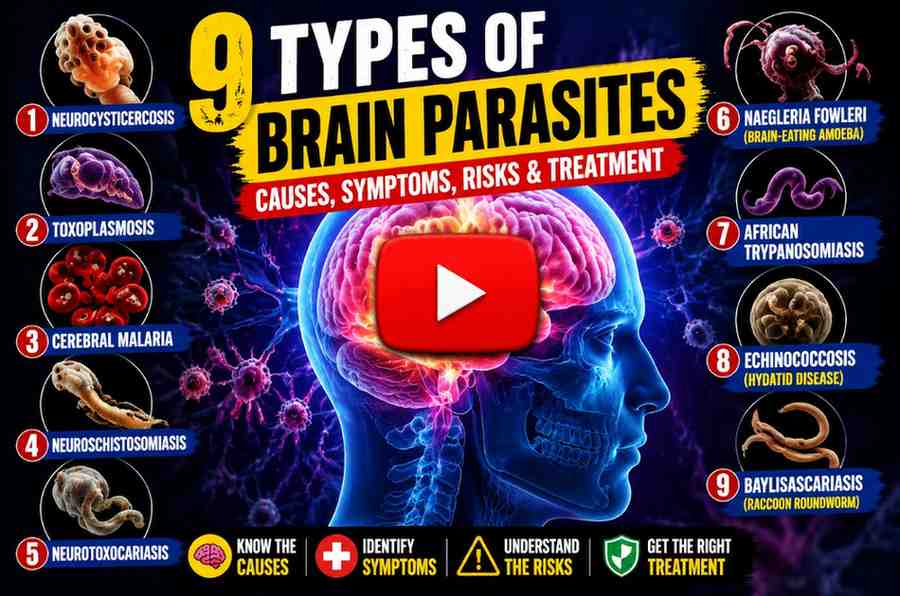

1. Neurocysticercosis (Taenia solium – Pork Tapeworm)
Neurocysticercosis is one of the most common parasitic infections affecting the brain worldwide. It occurs when humans ingest the eggs of the pork tapeworm, which then hatch and travel through the bloodstream to the brain.
Once inside the brain, the larvae form cyst-like structures. These cysts may remain dormant or trigger inflammation when they die, leading to seizures, headaches, and neurological dysfunction.
In many developing regions, this condition is a leading cause of acquired epilepsy. The severity depends on the number, size, and location of cysts in the brain.
2. Toxoplasmosis
Toxoplasmosis is caused by a microscopic parasite commonly transmitted through undercooked meat, contaminated water, or exposure to cat feces.
In healthy individuals, it may cause mild or no symptoms. However, when it affects the brain—especially in people with weakened immune systems—it can lead to encephalitis, confusion, seizures, and behavioral changes.
The parasite can remain dormant in brain tissue for years, occasionally reactivating under immune suppression.
3. Cerebral Malaria
Cerebral malaria is a severe complication of malaria infection transmitted by mosquitoes. It occurs when infected red blood cells block small blood vessels in the brain.
This blockage reduces oxygen supply and triggers inflammation, leading to coma, seizures, and brain swelling.
It is most common in young children in malaria-endemic regions of Africa and can be fatal without immediate treatment.
4. Schistosomiasis
Schistosomiasis is caused by parasitic worms found in contaminated freshwater. While it primarily affects the liver and urinary system, certain species can migrate to the brain.
When this happens, it leads to neuroschistosomiasis, causing headaches, seizures, and spinal cord inflammation.
Neurological involvement results from immune reactions to parasite eggs lodged in brain tissue.
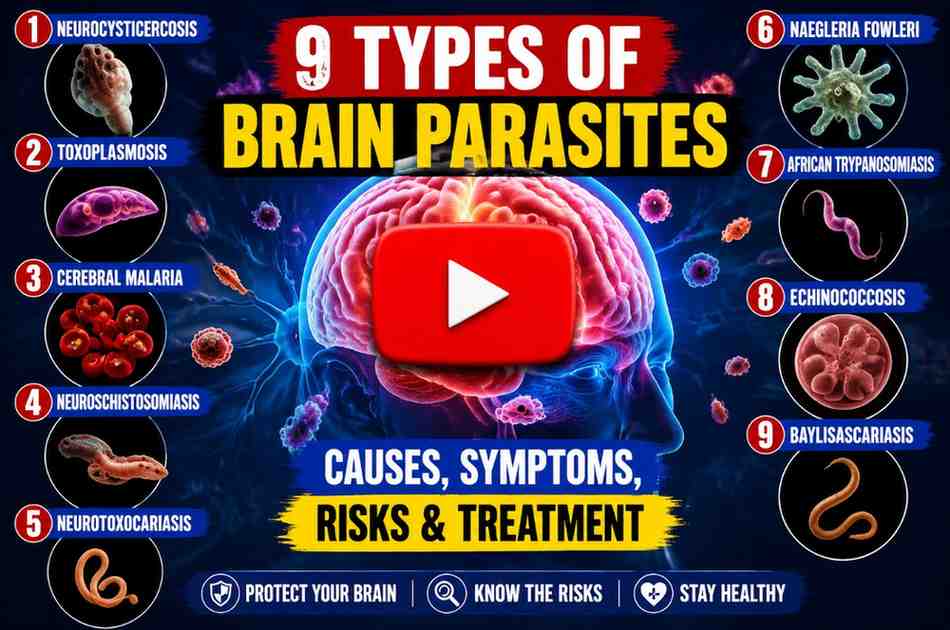
5. Toxocariasis (Toxocara canis / Toxocara cati)
Toxocariasis is caused by roundworms commonly found in dogs and cats. Humans become infected by accidentally ingesting eggs from contaminated soil or surfaces.
When larvae migrate to the brain, the condition is called neurotoxocariasis. It can cause inflammation, headaches, behavioral changes, and in rare cases, seizures.
Children are at higher risk due to frequent exposure to contaminated outdoor environments.
6. Amoebic Encephalitis (Naegleria fowleri)
Naegleria fowleri is often called the “brain-eating amoeba.” It lives in warm freshwater such as lakes, rivers, and hot springs.
Infection occurs when contaminated water enters the nose and travels to the brain through the olfactory nerve.
It causes primary amoebic meningoencephalitis (PAM), a rapidly progressing and almost always fatal brain infection that leads to severe headache, fever, hallucinations, and coma.
7. African Trypanosomiasis (Sleeping Sickness)
African trypanosomiasis is caused by Trypanosoma brucei parasites transmitted by the tsetse fly.
In the later stages of infection, parasites cross into the brain, causing inflammation of brain tissues (encephalitis).
This leads to confusion, sleep disturbances, personality changes, and progressive neurological decline. Without treatment, it can be fatal.
8. Echinococcosis (Hydatid Disease – Brain Involvement)
Echinococcosis is caused by tapeworms of the genus Echinococcus, typically transmitted from dogs and livestock.
Although it mainly affects the liver and lungs, cysts can sometimes form in the brain.
These cysts grow slowly and may cause pressure effects that lead to headaches, seizures, vision problems, and neurological deficits, depending on their location.
9. Baylisascariasis (Raccoon Roundworm Infection)
Baylisascariasis is a rare but serious infection caused by Baylisascaris procyonis, a parasite found in raccoons.
Humans, especially children, can become infected by accidentally ingesting contaminated soil or objects.
Once in the body, larvae migrate to the brain and can cause severe neurological damage, including loss of coordination, blindness, and coma.
Although rare, this infection is often severe and difficult to treat once it reaches the central nervous system.
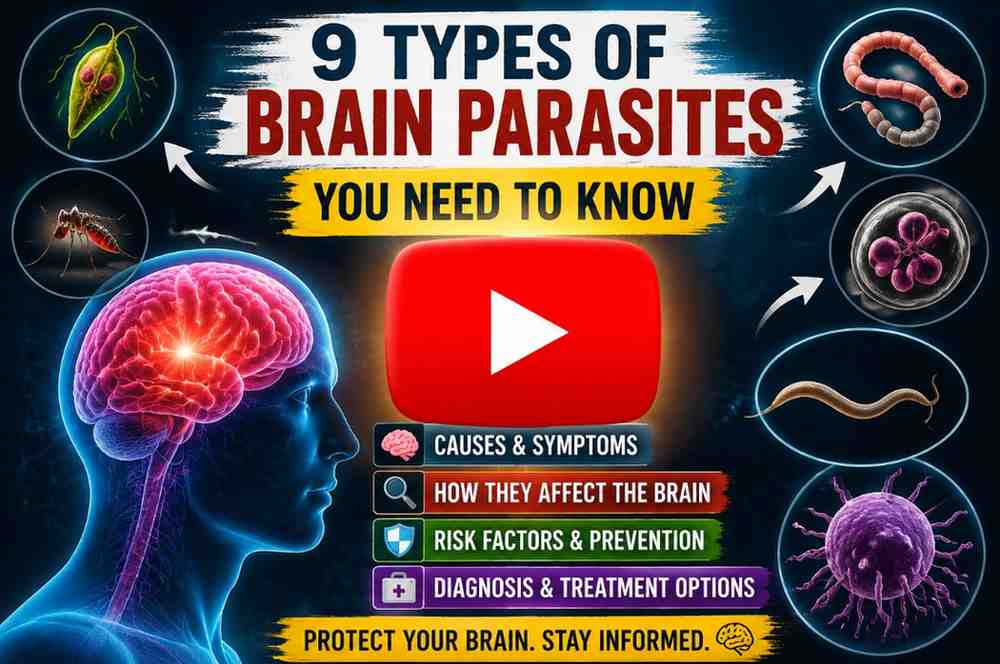
How Brain Parasites Affect the Nervous System
Brain parasites typically damage the nervous system through three main mechanisms:
- Direct tissue invasion: Parasites physically enter the brain tissues and disrupt normal function
- Inflammatory response: The immune system reacts strongly, causing swelling and pressure in the brain
- Blockage of blood flow or fluid circulation: Some parasites obstruct vessels or cerebrospinal fluid pathways, increasing intracranial pressure
These mechanisms often overlap, making neurological symptoms more severe over time.
Common Symptoms of Brain Parasitic Infections
Symptoms vary depending on the parasite type and infection stage, but commonly include:
- Persistent headaches
- Seizures or epilepsy
- Memory problems or confusion
- Personality or behavioral changes
- Vision disturbances
- Loss of coordination
- Fever and fatigue (in acute infections)
Early detection is critical because many neurological effects become irreversible if untreated.
Risk Factors for Brain Parasites
Certain conditions increase the likelihood of infection:
- Poor sanitation and contaminated water exposure
- Consumption of undercooked meat or unwashed vegetables
- Living in or traveling to tropical regions
- Close contact with animals (cats, dogs, raccoons)
- Weak immune system (HIV/AIDS, chemotherapy, organ transplant patients)
- Frequent freshwater exposure in endemic areas
Diagnosis and Treatment Overview
Diagnosis typically involves:
- Brain imaging (MRI or CT scans)
- Blood tests and antibody screening
- Cerebrospinal fluid analysis
- Stool or tissue examination (in some infections)
Treatment depends on the parasite type and may include:
- Antiparasitic medications (albendazole, praziquantel, etc.)
- Anti-inflammatory drugs to reduce brain swelling
- Anticonvulsants for seizure control
- In severe cases, surgical removal of cysts or lesions
Early treatment significantly improves outcomes.
Prevention of Brain Parasitic Infections
Preventive strategies are crucial and include:
- Washing hands regularly and maintaining hygiene
- Cooking meat thoroughly
- Drinking safe, filtered water
- Avoiding raw or undercooked animal products
- Wearing shoes outdoors in contaminated soil regions
- Using mosquito protection in endemic malaria areas
- Avoiding swimming in unsafe freshwater sources
Conclusion
Brain parasites represent a diverse group of organisms capable of causing serious neurological disease. From tapeworms and protozoa to amoebas and roundworms, these infections highlight the delicate balance between human health and environmental exposure.
Although some infections are rare, others, like toxoplasmosis and neurocysticercosis, are widespread globally. Awareness, hygiene, and early medical care remain the most effective defenses against these potentially life-threatening conditions.
Understanding the 9 types of brain parasites helps improve early recognition, prevention, and timely treatment—ultimately reducing long-term neurological complications.
References
About Us
