Horse Salt Trick Recipe: Complete Health Truth Guide
The “Horse Salt Trick Recipe” has exploded across social media platforms, becoming one of the most talked-about viral wellness trends in recent years.
From TikTok clips to YouTube shorts and Instagram reels, thousands of videos claim that a special type of mineral salt often referred to as “horse salt,” “blue salt,” or “natural mineral salt trick” can rapidly boost male stamina, energy levels, circulation, hydration, and even sexual performance.
At first glance, the idea sounds simple and appealing: a natural mineral-based trick that improves vitality without pills or complicated routines. However, when examined through a scientific and medical lens, the reality becomes far more complex.
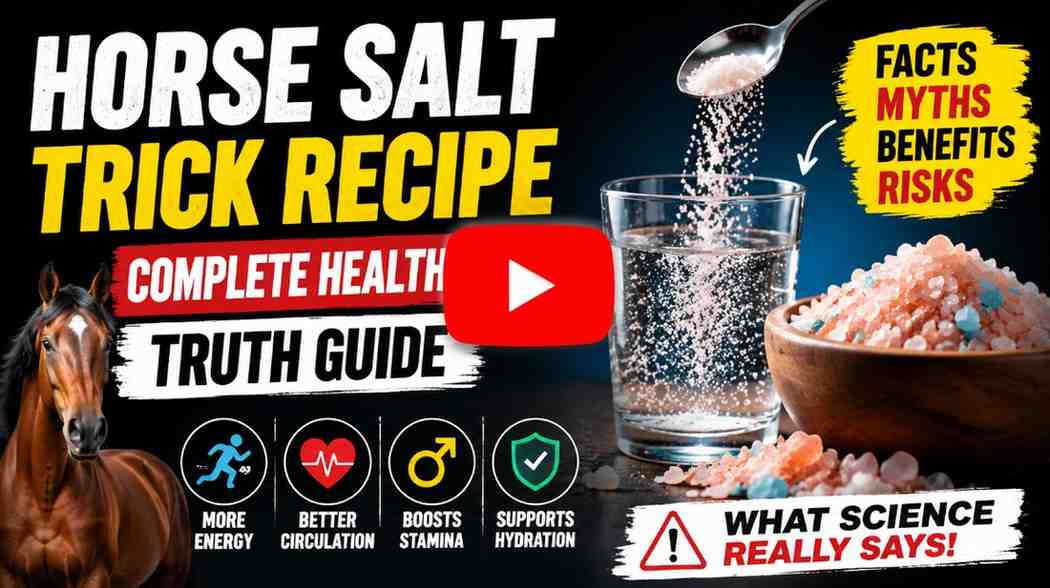

This in-depth guide breaks down everything you need to know about the Horse Salt Trick Recipe, including what it is, where it came from, how it is used online, and whether it actually delivers the powerful health benefits claimed in viral content.
What Is the Horse Salt Trick Recipe?
The Horse Salt Trick Recipe is not a standardized medical or nutritional formula. Instead, it is a loosely defined internet trend involving the use of mineral-rich salts mixed into water or beverages for perceived energy and performance benefits.
Most viral versions include:
- A pinch of Himalayan salt or mineral salt
- Blue-colored mineral salt (sometimes marketed as rare salt)
- Salt mixed into water, lemon water, or juice
- Consumption before exercise or intimate activity
- Occasional combination with honey or citrus drinks
Despite its dramatic name, there is no official formulation, clinical definition, or medically recognized protocol behind this so-called “recipe.”
The term “horse salt” is misleading and does not refer to a special human-grade supplement. Instead, it originates from mineral lick blocks used for livestock, such as horses and cattle, which provide essential electrolytes in controlled agricultural environments.
On social media, however, the term has been repurposed to suggest something more powerful, exotic, and performance-enhancing than ordinary salt.
Why Is It Called “Horse Salt”?
The name “horse salt” comes from agricultural mineral salt blocks used in animal farming. These blocks contain sodium, potassium, magnesium, calcium, and trace minerals required for livestock hydration and nerve function.
Farm animals lick these blocks to maintain electrolyte balance, especially in hot climates or during physical exertion.
However, what works in controlled animal nutrition settings does not directly translate into human performance enhancement.
The viral trend takes this agricultural concept and rebrands it as a human “biohack,” despite no scientific evidence supporting such use.
The catchy name contributes significantly to its viral spread, as it sounds both powerful and mysterious.

The Viral Claims Behind the Horse Salt Trick
Across social media, the Horse Salt Trick Recipe is associated with bold and often exaggerated claims, including:
- Instant increase in male energy and stamina
- Improved blood circulation within minutes
- Boost in testosterone levels naturally
- Enhanced sexual performance and endurance
- Better hydration than plain water
- Rapid fatigue recovery
These claims are often supported by anecdotal testimonials rather than scientific evidence.
Videos frequently show individuals drinking salt water and reporting immediate improvements in energy or performance. However, such claims are not backed by clinical studies or physiological research.
Understanding Salt and Electrolytes in the Human Body
To evaluate the claims properly, it is important to understand how salt actually functions in the human body.
Salt (sodium chloride) is an essential electrolyte that supports:
- Fluid balance regulation
- Nerve signal transmission
- Muscle contraction and relaxation
- Blood pressure maintenance
- Cellular hydration
The body requires a delicate balance of sodium and other electrolytes, such as potassium and magnesium, to function properly.
However, balance is key. Both deficiency and excess can cause health issues.
Excess sodium intake is associated with:
- High blood pressure
- Increased risk of cardiovascular disease
- Kidney strain
- Fluid retention and bloating
- Reduced arterial flexibility over time
So while salt is necessary for survival, it is not a performance-enhancing compound in the way viral content suggests.
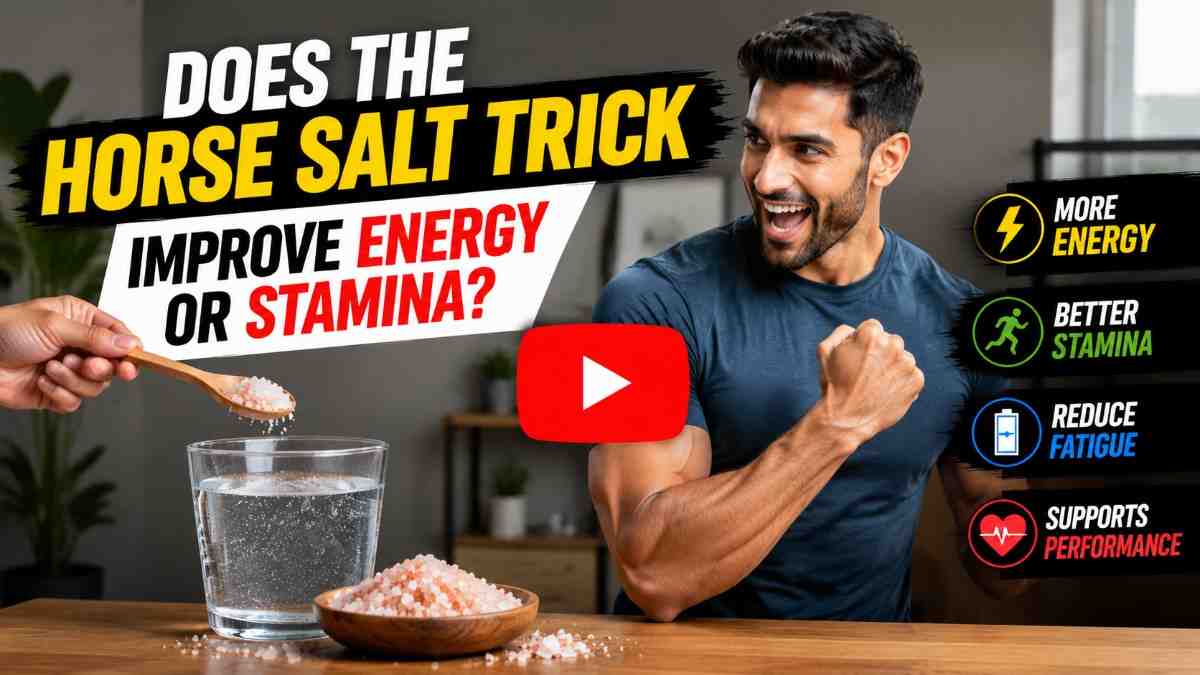
Does the Horse Salt Trick Improve Energy or Stamina?
One of the biggest claims is that the Horse Salt Trick Recipe increases physical energy and stamina.
From a scientific standpoint, energy production in the body comes from cellular metabolism involving glucose, oxygen, and mitochondrial activity, not from salt intake.
Salt may temporarily affect hydration status, which can influence how energetic someone feels if they were previously dehydrated. However, this is not the same as enhancing true biological energy production.
Any perceived boost is likely due to:
- Temporary rehydration
- Placebo effect
- Psychological expectation
- Correction of mild electrolyte imbalance
There is no evidence that salt directly enhances stamina or endurance performance in healthy individuals.
The Truth About Blue Salt and Mineral Salt Claims
Many viral videos specifically mention “blue salt” or rare mineral salts as the key ingredient in the Horse Salt Trick Recipe.
Blue salt is often marketed as a premium mineral salt containing trace minerals such as potassium, magnesium, and calcium.
While these minerals are essential for health, the amounts present in salt crystals are extremely small and insufficient to cause dramatic physiological changes.
Most people already receive adequate minerals through a normal diet, including:
- Fruits
- Vegetables
- Whole grains
- Dairy products
- Regular salt intake
Therefore, the idea that blue salt provides a performance “upgrade” is not supported by nutritional science.
Can the Horse Salt Trick Improve Blood Circulation?
Another major claim is improved blood flow and circulation.
Blood circulation is influenced by:
- Heart health
- Arterial flexibility
- Nitric oxide production
- Physical activity
- Diet quality
While sodium does play a role in blood pressure regulation, excessive intake actually contributes to hypertension, which can negatively impact circulation.
In fact, long-term high salt consumption is associated with:
- Reduced endothelial function
- Increased vascular stiffness
- Higher cardiovascular strain
So rather than improving circulation, excessive salt may contribute to the opposite effect over time.
Sexual Performance Claims: What Science Says
One of the most viral aspects of the Horse Salt Trick Recipe is its supposed effect on male sexual performance.
Sexual performance depends on multiple biological and psychological factors, including:
- Hormonal balance (testosterone, etc.)
- Blood vessel function
- Nervous system signaling
- Mental health and stress levels
- Cardiovascular fitness
There is no scientific mechanism by which salt alone can significantly improve testosterone levels or erectile function.
In fact, poor cardiovascular health caused by excessive sodium intake may contribute to sexual performance issues in the long term.
This directly contradicts the claims made in viral videos.
Psychological Reasons People Believe It Works
Even though the Horse Salt Trick Recipe lacks scientific backing, many individuals report feeling benefits. This can be explained through psychological and physiological effects such as:
- Placebo Effect: Believing something will work can temporarily improve perceived energy and confidence.
- Hydration Correction: If someone were mildly dehydrated, salt water may temporarily restore fluid balance.
- Behavioral Changes: Trying a “health trick” often leads to improved awareness of diet, hydration, or activity.
- Misinterpretation of Natural Variation: Energy levels naturally fluctuate throughout the day, and these fluctuations may be wrongly attributed to the salt mixture.
Is the Horse Salt Trick Safe?
Safety depends on the frequency and quantity of salt consumption.
Occasional small amounts of salt are generally safe for healthy individuals. However, repeated use of concentrated salt mixtures may lead to:
- Elevated blood pressure
- Water retention
- Kidney stress
- Electrolyte imbalance
- Increased cardiovascular risk in sensitive individuals
People with existing conditions such as hypertension, kidney disease, or heart problems should be especially cautious.
Why the Horse Salt Trick Went Viral
Several factors contributed to the popularity of this trend:
- Short-form video platforms favor dramatic claims
- Desire for quick fixes and natural remedies
- Misleading testimonials and edited content
- Curiosity around “ancient” or “secret” health hacks
- Lack of scientific literacy among audiences
- Algorithm-driven amplification of engaging content
Virality often reflects engagement, not accuracy.
Better Alternatives to the Horse Salt Trick Recipe
Instead of relying on unverified viral hacks, science-supported strategies for improving energy, stamina, and circulation include:
- Regular cardiovascular exercise
- A balanced diet rich in nutrients
- Proper hydration with water and electrolytes
- Adequate sleep and recovery
- Stress management techniques
- Medical consultation for persistent issues
These approaches address the root causes of fatigue and performance concerns rather than offering temporary illusions.
Final Verdict: Does the Horse Salt Trick Really Work?
The Horse Salt Trick Recipe is a viral internet trend built on misunderstanding, exaggeration, and misinformation about salt and human physiology.
While salt is essential for bodily function, it does not provide:
- Instant energy enhancement
- Testosterone boosts
- Sexual performance improvement
- Significant circulation benefits
Any perceived effects are temporary, psychological, or related to hydration balance rather than true physiological enhancement.
From a medical and scientific standpoint, the claims are not supported.
A balanced lifestyle remains the most effective and safe way to support long-term energy, performance, and overall health.
References
- https://www.healthline.com/nutrition/sodium
- https://www.webmd.com/diet/health-benefits-salt
- https://www.ncbi.nlm.nih.gov/books/NBK470284/
.
About Us