Paroxetine for Erectile Dysfunction: Uses, Effects & Risks
Erectile dysfunction (ED) is one of the most common male sexual health concerns worldwide, affecting men across different age groups. It is not only a physical issue but also a psychological and emotional condition that can significantly affect confidence, relationships, and quality of life.
While ED is often associated with blood flow problems or hormonal imbalance, modern research shows that brain chemistry plays an equally important role in sexual performance.
One of the medications that strongly interacts with brain chemistry is Paroxetine, a selective serotonin reuptake inhibitor (SSRI).
Paroxetine is widely prescribed for depression and anxiety disorders, but it is also known for having one of the highest rates of sexual side effects among antidepressants.
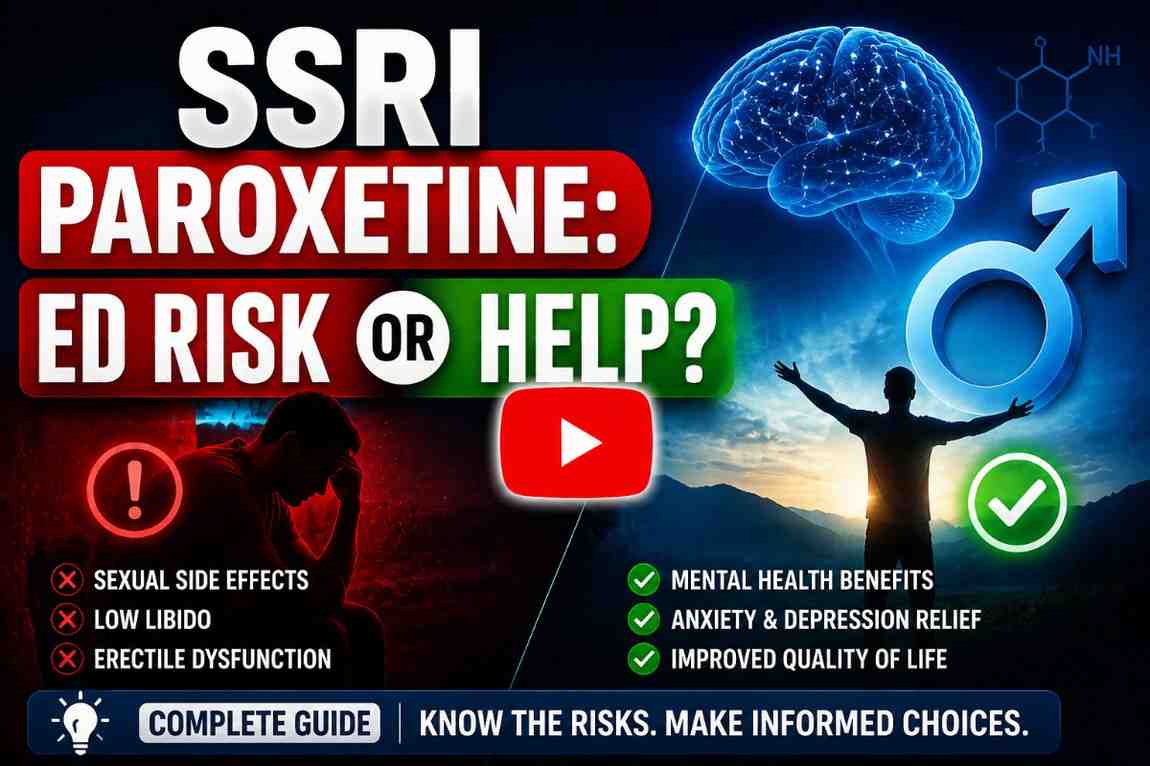
Interestingly, this makes it both a cause of erectile dysfunction in some cases and a treatment option for other sexual conditions like premature ejaculation.

This dual role creates confusion among patients and even in some healthcare discussions. Understanding how Paroxetine influences sexual function is essential for anyone experiencing erectile dysfunction while taking antidepressants or considering mental health treatment options.
What Is Paroxetine?
Paroxetine is a prescription medication classified as a selective serotonin reuptake inhibitor (SSRI). It works by increasing serotonin levels in the brain, which helps regulate mood, anxiety, and emotional stability.
It is commonly prescribed for:
- Major depressive disorder
- Generalized anxiety disorder
- Panic disorder
- Obsessive-compulsive disorder (OCD)
- Post-traumatic stress disorder (PTSD)
- Social anxiety disorder
By increasing serotonin activity, Paroxetine helps reduce excessive worry, panic, and depressive symptoms. However, serotonin also plays a complex role in sexual behavior, which explains why sexual side effects are common with SSRIs.
Unlike some antidepressants that have mild sexual side effects, Paroxetine is often considered one of the most likely SSRIs to interfere with sexual function.

Understanding Erectile Dysfunction (ED)
Erectile dysfunction is defined as the persistent inability to achieve or maintain an erection sufficient for satisfactory sexual performance. It can be occasional or chronic, and it may have physical, psychological, or mixed causes.
Common causes include:
- Reduced blood flow to the penis
- High blood pressure and cardiovascular disease
- Diabetes and insulin resistance
- Hormonal imbalance (low testosterone)
- Anxiety, depression, and stress
- Medication side effects
- Lifestyle factors like smoking and alcohol
In many cases, ED is not caused by a single factor but rather a combination of physical and psychological influences. Brain chemicals like dopamine, serotonin, and norepinephrine play a central role in sexual arousal and erection quality.
This is where medications like Paroxetine become highly relevant.
How Paroxetine Works in the Brain
Paroxetine increases serotonin levels by blocking its reuptake in the brain. Serotonin is a neurotransmitter responsible for mood regulation, emotional stability, and anxiety control.
While higher serotonin levels improve mental health symptoms, they can also suppress other neurotransmitters such as dopamine. Dopamine is essential for sexual desire, arousal, and erection initiation.
This imbalance creates a neurological environment where:
- Mood improves
- Anxiety decreases
- Sexual desire may reduce
- Erection response may weaken
This explains why many patients report sexual dysfunction after starting Paroxetine therapy.
Paroxetine and Erectile Dysfunction: The Scientific Connection
Research consistently shows that SSRIs, particularly Paroxetine, are associated with sexual side effects, including erectile dysfunction.
These effects include:
- Reduced libido (sexual desire)
- Difficulty achieving an erection
- Loss of spontaneous erections
- Delayed ejaculation
- Inability to reach orgasm in some cases
Paroxetine is often cited as one of the SSRIs most strongly linked to sexual dysfunction due to its potent serotonin reuptake inhibition and longer half-life.
Why this happens:
- Serotonin-dopamine imbalance
Increased serotonin suppresses dopamine activity, reducing sexual excitement. - Central nervous system suppression
Brain pathways responsible for arousal become less responsive. - Reduced nitric oxide signaling indirectly
Erections depend on vasodilation, which may be affected by neurotransmitter imbalances. - Emotional blunting
Some users experience reduced emotional intensity, which affects sexual desire.
Can Paroxetine Actually Be Used for Sexual Problems?
Although Paroxetine can cause erectile dysfunction, it is paradoxically used in a different sexual condition: premature ejaculation (PE).
In premature ejaculation treatment:
Paroxetine helps by:
- Delaying ejaculation
- Increasing sexual stamina
- Improving control over climax
- Reducing performance anxiety in some patients
Doctors sometimes prescribe low-dose Paroxetine off-label for men with premature ejaculation because serotonin delay mechanisms help prolong sexual activity.
However, this benefit comes with a trade-off: reduced erection quality or decreased libido in some individuals.
Paroxetine vs Erectile Dysfunction Medications
When ED occurs due to Paroxetine, doctors often consider several treatment approaches.
1. PDE5 inhibitors (e.g., sildenafil, tadalafil)
These medications directly improve blood flow to the penis and may counteract SSRI-induced erectile dysfunction.
2. Switching antidepressants
Some antidepressants have lower sexual side effects and may be better alternatives for patients sensitive to Paroxetine.
3. Dose reduction
Lowering the dosage may improve sexual function while maintaining mental health benefits.
4. Combination therapy
In some cases, antidepressants and ED medications are prescribed together under medical supervision.
Risk Factors That Increase Sexual Side Effects
Not everyone experiences erectile dysfunction with Paroxetine. Several factors increase risk:
- Higher medication dosage
- Long-term usage
- Older age
- Pre-existing sexual dysfunction
- Diabetes or heart disease
- High psychological stress
- Alcohol or nicotine use
Men with existing anxiety or depression are also more likely to notice sexual side effects.
Psychological Impact of Paroxetine-Induced ED
Erectile dysfunction caused by medication can have a strong psychological impact, including:
- Reduced self-confidence
- Anxiety before sexual activity
- Fear of repeated failure
- Relationship stress
- Avoidance of intimacy
This creates a feedback loop where anxiety worsens ED, and ED increases anxiety.
In such cases, addressing psychological health is just as important as physical treatment.
Managing Erectile Dysfunction Caused by Paroxetine
If Paroxetine is suspected to contribute to erectile dysfunction, several clinical strategies may be used.
1. Medication adjustment
Doctors may reduce dosage or adjust timing to minimize sexual side effects.
2. Switching antidepressants
Alternatives like bupropion may be considered due to lower sexual side effects.
3. Adding ED medications
PDE5 inhibitors can restore erectile function while continuing antidepressant therapy.
4. Behavioral therapy
Counseling and cognitive behavioral therapy help manage anxiety-related ED.
5. Lifestyle improvements
Exercise, weight control, and stress reduction can naturally improve sexual health.
Long-Term Concerns: Post-SSRI Sexual Dysfunction (PSSD)
In rare cases, sexual dysfunction may persist even after stopping SSRIs like Paroxetine. This condition is known as post-SSRI sexual dysfunction (PSSD).
Symptoms may include:
- Persistent low libido
- Erectile difficulties
- Reduced genital sensitivity
- Delayed sexual response
Although still under research, PSSD highlights the importance of careful SSRI use under medical supervision.
Who Should Be Careful with Paroxetine?
Paroxetine should be used cautiously in:
- Men already experiencing erectile dysfunction
- Patients with hormonal imbalance
- Individuals sensitive to sexual side effects
- Those with cardiovascular conditions
- Patients on multiple interacting medications
Doctors usually evaluate the risk-benefit balance before prescribing it.
Medical Perspective on Paroxetine and ED
From a clinical standpoint, Paroxetine is effective for mental health disorders but must be prescribed carefully when sexual health is a concern.
Physicians consider:
- Mental health severity
- Sexual activity importance
- Patient sensitivity to side effects
- Availability of alternatives
In many cases, mental health benefits outweigh sexual side effects, but individualized treatment is essential.
Key Takeaways
- Paroxetine is an SSRI antidepressant that affects serotonin levels
- It is strongly associated with sexual side effects, including erectile dysfunction
- It may reduce libido, arousal, and erection quality
- It is also used off-label for premature ejaculation
- Effects vary depending on dosage, health status, and individual sensitivity
- Erectile dysfunction caused by Paroxetine is often reversible
- Medical supervision is essential for safe use
Conclusion
Paroxetine plays a complex and dual role in sexual health. While it is primarily used to treat depression and anxiety, its impact on serotonin levels can significantly influence sexual performance.
For some individuals, it may contribute to erectile dysfunction by reducing libido and interfering with arousal pathways. For others, it may help manage premature ejaculation by delaying orgasm.
This dual effect highlights the importance of personalized medical care. Erectile dysfunction linked to Paroxetine should never be ignored or self-treated. Instead, patients should work closely with healthcare providers to adjust medication, explore alternatives, or use supportive treatments if necessary.
Ultimately, understanding the relationship between Paroxetine and erectile dysfunction helps patients make informed decisions and achieve better outcomes in both mental and sexual health.
References
- https://en.wikipedia.org/wiki/Paroxetine
- https://www.healthline.com/health/paroxetine
- https://www.webmd.com/drugs/2/drug-11121/paroxetine-oral/details
.
About Us